Emulsifier
Liquid Preparation
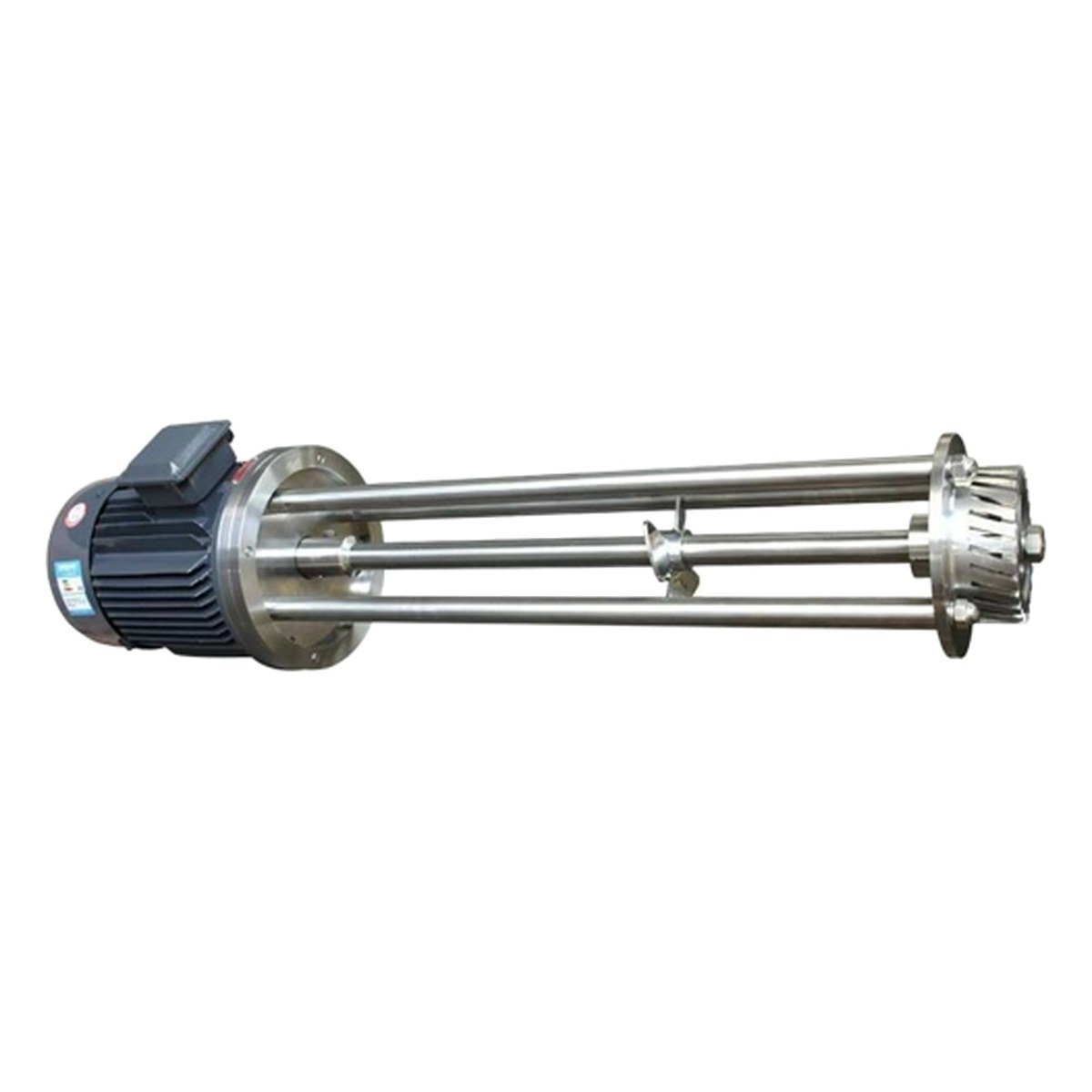
Emulsifier
EQP-PHL-001 V1.0
1. Product Overview
An emulsifier is a specialized piece of pharmaceutical and industrial processing equipment designed to convert two or more immiscible liquids into a stable, homogeneous emulsion through high-speed shearing and intensive stirring. The equipment employs precisely engineered rotor-stator assemblies that generate extreme shear forces within a controlled processing zone, breaking down dispersed-phase droplets to sub-micron dimensions and ensuring long-term emulsion stability.
In pharmaceutical manufacturing, emulsifiers play a critical role in the production of topical creams, ointments, injectable lipid emulsions, and sustained-release formulations. The ability to produce uniform droplet size distributions with narrow polydispersity indices directly impacts drug bioavailability, product shelf life, and patient safety. Modern pharmaceutical emulsifiers are designed to comply with current Good Manufacturing Practice (cGMP) requirements, featuring sanitary-grade surface finishes, clean-in-place (CIP) and sterilize-in-place (SIP) capabilities, and full documentation support for validation protocols.
Beyond pharmaceuticals, emulsifiers find extensive application in the cosmetics industry for cream and lotion production, in the food and beverage industry for sauce, dressing, and beverage homogenization, and in the chemical industry for coatings, adhesives, and specialty chemical formulations. The versatility of modern emulsifier designs allows for scale-up from laboratory-scale development batches to full production volumes while maintaining consistent product quality and process parameters.
This specification document provides comprehensive technical details for the selection, installation, operation, and maintenance of emulsifier systems within pharmaceutical liquid processing facilities. It covers system classification, detailed technical parameters, core component selection criteria, applicable design standards and certifications, customizable options, warranty terms, packaging and delivery specifications, and the information required for a formal inquiry.
2. Working Principle
2.1 High-Speed Rotor-Stator Shear Emulsification Principle
The fundamental working principle of an emulsifier is based on the application of intense mechanical energy to a multiphase fluid system, sufficient to overcome the interfacial tension between immiscible liquid phases and to reduce the dispersed-phase droplet size to a level where Brownian motion and electrostatic or steric stabilization mechanisms can maintain emulsion integrity over extended periods.
High-Speed Rotor-Stator Shearing: The most common emulsification mechanism utilizes a high-speed rotor spinning within a precision-machined stator. The rotor generates high-velocity fluid streams that are forced through narrow slots or perforations in the stator wall. As the fluid passes through these restricted passages, it experiences extreme velocity gradients and elongational flow fields that stretch and rupture droplets of the dispersed phase. Typical rotor tip speeds range from 10 to 40 m/s, with shear rates exceeding 100,000 s⁻¹ in the working zone. The rapid acceleration and deceleration of fluid elements create intensive hydraulic shear, impact forces, and cavitation effects that collectively contribute to droplet size reduction.
2.2 Hydraulic Shear Emulsification
In hydraulic shear-based systems, the fluid is forced through specially designed valves or orifices at high pressure. The pressure drop across the restriction converts potential energy into kinetic energy, creating turbulent flow regimes with intense micro-scale mixing. The resulting eddies and velocity fluctuations generate shear stresses capable of disrupting droplet interfaces. Hydraulic shear systems are particularly effective for processing high-viscosity fluids and for achieving very fine emulsions with droplet sizes below 1 micrometer.
2.3 Ultrasonic Emulsification
Ultrasonic emulsifiers employ high-frequency sound waves (typically 20–100 kHz) transmitted through a probe or horn immersed in the process fluid. The alternating high-pressure and low-pressure cycles of the ultrasonic wave induce acoustic cavitation—the formation, growth, and violent collapse of microscopic vapor bubbles. The implosion of these cavitation bubbles generates localized temperatures of several thousand degrees Kelvin and pressures of several hundred atmospheres, producing extreme shear forces that disrupt droplet interfaces and create fine emulsions. Ultrasonic systems are particularly suited for laboratory-scale work, nanoemulsion production, and applications requiring precise energy input control.
2.4 High-Pressure Homogenization
High-pressure homogenizers force the pre-mixed emulsion through a precisely engineered homogenizing valve at pressures ranging from 50 to over 2,000 bar. The fluid undergoes intense acceleration, turbulence, cavitation, and impact as it passes through the valve gap, resulting in dramatic droplet size reduction. Multiple passes through the homogenizer can achieve increasingly narrow droplet size distributions. This technology is essential for producing injectable lipid emulsions with droplet sizes below 200 nm, where regulatory requirements mandate strict control of the large tail of the droplet size distribution to ensure patient safety.
3. System Classification
Emulsifier systems are classified according to their structural configuration, the emulsification method employed, and their intended application field. This multi-dimensional classification framework enables users to identify the most appropriate equipment for their specific process requirements.
3.1 Classification by Structural Configuration
In-Line Emulsifier: Designed for continuous processing, the in-line emulsifier integrates directly into the process piping. Fluid is pumped through the rotor-stator assembly in a single pass or recirculated through a holding vessel. Advantages include continuous operation, compact footprint, ease of integration into existing process lines, and the ability to process large volumes with consistent product quality. In-line units are available in single-stage and multi-stage configurations, with the latter providing progressively finer emulsification through a series of rotor-stator pairs of decreasing gap dimensions.
Vessel-Type Emulsifier: The vessel-type (or batch) emulsifier consists of a processing vessel equipped with one or more emulsifying heads and an anchor or scraper agitator. The entire formulation is charged into the vessel and processed until the desired droplet size distribution and product consistency are achieved. Vessel-type systems are preferred for batch manufacturing processes, formulations requiring simultaneous heating and cooling, and products that demand extended processing times for complete emulsification. They are available in working volumes from 5 liters to over 5,000 liters.
Vacuum Homogenizing Emulsifier: The vacuum homogenizing emulsifier is a vessel-type system designed to operate under reduced pressure conditions. The vacuum environment prevents air entrapment during high-speed mixing, eliminates foam formation, and facilitates the removal of volatile components or dissolved gases from the product. This configuration is essential for pharmaceutical and cosmetic formulations where entrapped air bubbles would compromise product appearance, stability, or filling accuracy. Vacuum emulsifiers typically incorporate a dual-agitator system combining a high-shear rotor-stator head with a slow-speed anchor scraper, vacuum pump assembly, and condensate recovery system.
3.2 Classification by Emulsification Method
Mechanical Emulsification: Encompasses all systems that rely on rotor-stator shear, high-pressure homogenization, or colloid mill action. Mechanical systems are the most widely used due to their robustness, scalability, and ability to handle a broad range of viscosities and formulations. They offer predictable performance and well-characterized scale-up relationships.
Ultrasonic Emulsification: Utilizes high-frequency acoustic energy to achieve droplet size reduction through cavitation. Ultrasonic systems are particularly effective for producing nanoemulsions with droplet sizes below 200 nm and for processing heat-sensitive materials due to the localized nature of the energy input. They are available in probe-type and flow-through configurations.
High-Pressure Homogenization: Employs extreme pressures to force fluid through a homogenizing valve, achieving droplet sizes in the sub-micron range. This method is the gold standard for producing injectable emulsions and liposomal formulations where particle size control is critical for safety and efficacy.
3.3 Classification by Application Field
Pharmaceutical Emulsifiers: Designed and manufactured to cGMP standards with full documentation support for FDA and EMA regulatory submissions. Features include sanitary tri-clamp connections, electropolished product-contact surfaces (Ra ≤ 0.4 μm), CIP/SIP capability, and material certifications (EN 10204 3.1). Pharmaceutical emulsifiers are used for topical creams and ointments, injectable lipid emulsions, oral suspensions, and ophthalmic formulations.
Cosmetic Emulsifiers: Configured for the production of skin care creams, lotions, serums, and sunscreens. Cosmetic emulsifiers emphasize product aesthetics, including smooth texture, uniform appearance, and stable viscosity. They often incorporate vacuum deaeration to ensure bubble-free products and jacketed vessels for precise temperature control during the emulsification and cooling phases.
Food Emulsifiers: Manufactured to food safety standards with FDA-compliant and 3-A Sanitary Standard-certified product-contact materials. Food emulsifiers are used for salad dressings, mayonnaise, beverage emulsions, sauce production, and dairy product processing. They feature hygienic designs that eliminate dead zones and facilitate thorough cleaning between production runs.
Chemical Emulsifiers: Engineered for the demanding requirements of chemical processing, including the production of paints, coatings, adhesives, agrochemical emulsions, and specialty chemical formulations. Chemical emulsifiers may incorporate explosion-proof motors, chemical-resistant seals, and reinforced vessel designs to accommodate aggressive solvents, high temperatures, and abrasive solid suspensions.
4. Detailed Technical Parameters
The following tables provide comprehensive technical parameters for the emulsifier product range. All parameters are based on standard configurations; specific values may vary depending on customization options selected.
4.1 Basic Technical Parameters
| Parameter | RH-5 | RH-10 | RH-50 | RH-100 | RH-500 | RH-1000 |
|---|---|---|---|---|---|---|
| Working Volume (L) | 3–5 | 6–10 | 30–50 | 60–100 | 300–500 | 600–1000 |
| Motor Power (kW) | 0.75 | 1.5 | 4 | 7.5 | 22 | 45 |
| Rotor Speed (rpm) | 0–6000 | 0–5000 | 0–4000 | 0–3500 | 0–3000 | 0–2500 |
| Shear Tip Speed (m/s) | ≤40 | ≤38 | ≤35 | ≤32 | ≤28 | ≤25 |
| Emulsifying Head | Single | Single | Single/Dual | Dual | Dual | Dual/Triple |
| Vacuum Level (MPa) | -0.09 | -0.09 | -0.095 | -0.095 | -0.098 | -0.098 |
| Jacket Pressure (MPa) | 0.3 | 0.3 | 0.3 | 0.3 | 0.3 | 0.3 |
| Surface Finish (Ra μm) | ≤0.4 | ≤0.4 | ≤0.4 | ≤0.4 | ≤0.4 | ≤0.4 |
4.2 In-Line Emulsifier Technical Parameters
| Parameter | IL-10 | IL-25 | IL-50 | IL-100 |
|---|---|---|---|---|
| Flow Rate (L/h) | 100–500 | 500–2,000 | 2,000–8,000 | 8,000–20,000 |
| Motor Power (kW) | 1.5 | 4 | 11 | 22 |
| Rotor Speed (rpm) | 0–10,000 | 0–8,000 | 0–6,000 | 0–5,000 |
| Stator Slots | 12 | 16 | 24 | 32 |
| Inlet/Outlet (DN) | 25 | 40 | 65 | 80 |
| Stages | 1–3 | 1–3 | 1–4 | 1–4 |
| Max. Viscosity (mPa·s) | 5,000 | 10,000 | 20,000 | 50,000 |
| CIP/SIP Compatible | Yes | Yes | Yes | Yes |
4.3 Vessel-Type Emulsifier Technical Parameters
| Parameter | VM-50 | VM-100 | VM-500 | VM-1000 |
|---|---|---|---|---|
| Working Volume (L) | 30–50 | 60–100 | 300–500 | 600–1000 |
| Homogenizer Power (kW) | 4 | 7.5 | 22 | 45 |
| Anchor Power (kW) | 0.75 | 1.5 | 4 | 7.5 |
| Homogenizer Speed (rpm) | 0–4000 | 0–3500 | 0–3000 | 0–2500 |
| Anchor Speed (rpm) | 10–60 | 10–50 | 5–40 | 5–30 |
| Scrapers | 2–4 | 2–4 | 4 | 4–6 |
| Vacuum Pump (kW) | 1.1 | 2.2 | 5.5 | 11 |
| Jacket Type | Full | Full | Full/Dimple | Full/Dimple |
4.4 Equipment Dimensions and Weight
| Model | Length (mm) | Width (mm) | Height (mm) | Weight (kg) | Floor Load (kg/m²) |
|---|---|---|---|---|---|
| RH-5 | 800 | 600 | 1,200 | 85 | 180 |
| RH-10 | 900 | 700 | 1,400 | 130 | 210 |
| RH-50 | 1,200 | 900 | 1,800 | 350 | 280 |
| RH-100 | 1,500 | 1,000 | 2,100 | 520 | 340 |
| RH-500 | 2,200 | 1,500 | 2,800 | 1,850 | 420 |
| RH-1000 | 2,800 | 1,800 | 3,500 | 3,200 | 500 |
4.5 Material Characteristics
| Component | Material | Standard | Surface Finish (Ra) | Certification |
|---|---|---|---|---|
| Vessel (product contact) | SS 316L | ASTM A240/A276 | ≤0.4 μm | EN 10204 3.1 |
| Vessel (non-contact) | SS 304 | ASTM A240 | ≤1.6 μm | EN 10204 3.1 |
| Rotor/Stator | SS 316L | ASTM A240/A276 | ≤0.4 μm | EN 10204 3.1 |
| Shaft | SS 316L | ASTM A276 | ≤0.4 μm | EN 10204 3.1 |
| Seals (product contact) | PTFE/EPDM/Silicone | FDA 21 CFR 177 | N/A | FDA Compliance |
| Jacket | SS 304 | ASTM A240 | ≤1.6 μm | EN 10204 3.1 |
| Gaskets | PTFE-Encapsulated | FDA 21 CFR 177 | N/A | FDA Compliance |
| Viewing Window | Borosilicate Glass | DIN 7080 | N/A | Certificate of Conformity |
5. Core Component Selection
The performance and reliability of an emulsifier system are fundamentally determined by the quality and specification of its core components. This section provides detailed guidance on the selection criteria for each major component group.
5.1 Emulsifying Head / Rotor-Stator Assembly
The emulsifying head is the heart of the emulsifier, responsible for generating the shear forces that reduce droplet size. Rotor-stator assemblies are available in several configurations optimized for different process requirements. The standard toothed rotor-stator design provides high shear and turbulence for general emulsification tasks. The fine-screen stator produces extremely high shear rates for sub-micron emulsification. The slotted stator offers a balance between shear intensity and throughput capacity. For high-viscosity applications, the saw-tooth rotor design generates intense radial flow and superior macro-mixing. Rotor and stator materials must be SS 316L with a hardness of at least HB 187 to resist wear from abrasive formulations. The rotor-stator clearance is maintained to tolerances of ±0.05 mm to ensure consistent shear performance. All product-contact surfaces are electropolished to Ra ≤0.4 μm to facilitate cleaning and prevent product adhesion.
5.2 Stirring System
The stirring system complements the emulsifying head by ensuring thorough macro-mixing and heat transfer throughout the vessel. In vacuum homogenizing emulsifiers, a dual-agitator configuration is standard: a high-speed central emulsifying head for dispersion and a low-speed anchor scraper for bulk mixing and wall heat transfer. The anchor scraper features spring-loaded PTFE or Teflon blades that conform to the vessel interior contour, ensuring complete product turnover and preventing localized overheating or insufficient mixing. Variable frequency drives (VFDs) provide independent speed control for each agitator, allowing operators to optimize the balance between high-shear dispersion and gentle bulk mixing for each specific formulation. For products with significant density differences between phases, pitched-blade turbines or hydrofoils may be specified as additional impellers to improve axial circulation.
5.3 Vacuum System
The vacuum system is critical for deaeration and the removal of volatile components during emulsification. A typical vacuum system comprises a liquid-ring vacuum pump or rotary vane pump, a vacuum buffer vessel, a condensate trap, and associated valves and instrumentation. The vacuum pump is sized to achieve a minimum vacuum level of -0.095 MPa (gauge) within 10 minutes for the rated vessel volume. A vacuum buffer vessel is installed between the process vessel and the vacuum pump to prevent product carryover into the pump mechanism. The condensate trap captures evaporated solvents or water vapor before they reach the pump, protecting the pump from corrosion and ensuring efficient vacuum generation. Pressure gauges and vacuum transmitters provide continuous monitoring of the vessel pressure, with safety relief valves set to prevent over-pressurization.
5.4 Heating and Cooling System
Precise temperature control is essential for emulsification processes, as temperature directly affects viscosity, interfacial tension, and emulsion stability. The heating and cooling system typically utilizes a jacketed vessel design with dimple-jacket or full-flow jacket configurations depending on vessel size and process requirements. Heating is accomplished by circulating hot water, steam, or thermal oil through the jacket, while cooling employs chilled water or a glycol solution. The heating and cooling media are supplied by an external temperature control unit (TCU) or connected to the facility utility systems. Temperature sensors (Pt100 RTDs) positioned at the vessel wall and in the product ensure accurate temperature monitoring. The heating rate is typically specified as ≥2°C/min, and the cooling rate as ≥1.5°C/min, depending on vessel size and jacket design. For processes requiring rapid temperature changes or precise setpoint control, an integrated TCU with PID control is recommended.
5.5 Control System
The control system provides automated process monitoring, parameter control, and data recording for the emulsifier. The standard control system is based on a PLC (Programmable Logic Controller) with an HMI (Human-Machine Interface) touchscreen panel. The PLC controls rotor speed, anchor speed, temperature setpoints, vacuum levels, and process timing according to user-defined recipes. The HMI displays real-time process parameters, alarm status, and historical trends. Recipe management allows operators to store and recall up to 100 process recipes, each specifying sequential steps with defined parameters, durations, and transition conditions. Data logging records all critical process parameters at intervals of 1–10 seconds, with data exportable in CSV or PDF format for batch record documentation. For integration into plant-wide SCADA systems, communications protocols including Ethernet/IP, Modbus TCP, and OPC UA are available. 21 CFR Part 11 compliance options include electronic signatures, audit trails, and user access levels.
6. Typical Application Fields
Emulsifiers serve a diverse range of industries and applications. The following subsections detail the primary application fields with specific product examples and process considerations.
6.1 Pharmaceutical Applications
Topical Creams and Ointments: Pharmaceutical emulsifiers are extensively used for the production of oil-in-water (O/W) and water-in-oil (W/O) topical creams. The emulsifier must achieve uniform droplet size distributions to ensure consistent drug release profiles and product stability. Vacuum homogenizing emulsifiers are preferred for topical products to prevent air incorporation, which could lead to oxidation of active pharmaceutical ingredients (APIs) and inconsistency in filled product weight. Process temperatures typically range from 70°C to 85°C during the emulsification phase, with controlled cooling to room temperature.
Injectable Emulsions: Injectable lipid emulsions (e.g., propofol, parenteral nutrition) represent the most demanding application for pharmaceutical emulsifiers. Regulatory pharmacopoeias (USP, EP, JP) require that the mean droplet size does not exceed 500 nm and that the volume-weighted percentage of droplets larger than 5 μm (PFAT5) is less than 0.05%. Achieving these specifications requires high-pressure homogenization at pressures of 500–1,500 bar with multiple passes. The entire process must be conducted under aseptic conditions, with sterilize-in-place (SIP) capability and validated clean-in-place (CIP) procedures.
Ophthalmic and Nasal Emulsions: Ophthalmic emulsions require droplet sizes in the range of 100–300 nm to avoid ocular irritation and ensure uniform drug delivery. Nasal emulsions must achieve droplet sizes compatible with spray nozzle geometries for consistent dose delivery. Both applications demand stringent particulate matter control and sterility assurance.
6.2 Cosmetic Applications
Skin Care Creams and Lotions: The cosmetics industry is the largest user of emulsifier equipment by unit volume. Products include day creams, night creams, anti-aging serums, moisturizing lotions, and sunscreen formulations. Vacuum homogenizing emulsifiers with capacities of 500–2,000 liters are standard for production-scale cosmetic manufacturing. The emulsifier must produce smooth, elegant products with uniform texture and no visible phase separation over the product shelf life, typically 24–36 months.
Hair Care Products: Shampoos, conditioners, and hair treatments frequently utilize emulsifier systems for the production of stable emulsified formulations. These products may incorporate volatile silicones and active ingredients that require vacuum processing to prevent evaporation and maintain formulation integrity.
6.3 Food Applications
Beverages and Dairy: Food emulsifiers are used for the production of flavored beverage emulsions, dairy alternatives, cream liqueurs, and fortified drinks. The equipment must meet 3-A Sanitary Standards and be designed for frequent cleaning and product changeovers. In-line emulsifiers are often preferred for continuous beverage production lines.
Sauces and Dressings: Mayonnaise, salad dressings, sauces, and condiments require controlled emulsification to achieve the desired texture, mouthfeel, and stability. The emulsifier must handle high oil-phase volumes (up to 80% for mayonnaise) and accommodate thickening agents and particulate inclusions.
6.4 Chemical Applications
Coatings and Paints: Emulsion paints, water-based coatings, and industrial coatings require high-shear emulsification to achieve stable pigment dispersions and uniform film-forming properties. Chemical emulsifiers for this application may incorporate explosion-proof motor ratings and solvent-resistant seals.
Adhesives and Sealants: Water-based adhesive formulations, including acrylic emulsions, PVA adhesives, and contact cements, utilize emulsifier systems to achieve stable polymer dispersions with controlled particle sizes. The equipment must handle high viscosities and be designed for easy cleaning to prevent cross-contamination between product runs.
7. Design Standards and Certifications
All emulsifier systems are designed, manufactured, and tested in compliance with applicable international standards and regulatory requirements. The following standards and certifications apply to the equipment described in this specification.
Good Manufacturing Practice (GMP): The equipment design adheres to current GMP principles as defined by the FDA (21 CFR Parts 210 and 211) and the European Commission (EudraLex Volume 4). Key GMP design features include smooth, crevice-free product-contact surfaces; complete drainability of all product-wetted components; sanitary connections using tri-clamp fittings; material certifications for all product-contact components; and CIP/SIP capability with validated cleaning and sterilization procedures.
U.S. Food and Drug Administration (FDA): Product-contact materials comply with FDA regulations for food and pharmaceutical contact surfaces. Elastomeric components (seals, gaskets, O-rings) are manufactured from materials listed in FDA 21 CFR Part 177. Stainless steel product-contact surfaces meet the requirements of FDA 21 CFR Part 177 for repeated food contact. Equipment documentation packages include material test reports, surface finish certificates, and certificates of conformity to support regulatory submissions.
ISO 9001:2015: The manufacturer's quality management system is certified to ISO 9001:2015, ensuring consistent quality in design, manufacturing, and service processes. All production activities are governed by documented procedures, with full traceability from raw material procurement through final inspection and shipment.
CE Marking: Equipment intended for installation within the European Economic Area (EEA) bears the CE marking in accordance with the applicable European Directives, including the Machinery Directive (2006/42/EC), the Pressure Equipment Directive (2014/68/EU), the Low Voltage Directive (2014/35/EU), and the Electromagnetic Compatibility Directive (2014/30/EU). A Declaration of Conformity is provided with each CE-marked unit.
3-A Sanitary Standards: For food and dairy applications, equipment is designed to comply with 3-A Sanitary Standards, including 3-A Standard 01-08 for sanitary fittings, 3-A Standard 02-08 for centrifugal and positive rotary pumps, and 3-A Standard 46-03 for sanitary vessels. 3-A compliance ensures that the equipment meets the highest standards of hygienic design for food-contact surfaces.
Additional certifications and standards include ASME BPE (Bioprocessing Equipment) for pharmaceutical applications, EN 10204 3.1 material certificates for all product-contact components, PED (Pressure Equipment Directive) compliance for jacketed vessels, and ATEX certification for explosion-proof configurations used in hazardous area installations.
8. Customizable Options
The emulsifier product range offers extensive customization to meet specific process requirements, regulatory standards, and facility constraints. The following table summarizes the available customizable options. Custom configurations beyond those listed may be available upon request; contact the sales engineering team for detailed consultation.
| No. | Customization Item | Available Options | Default / Standard | Applicable Models | Lead Time Impact |
|---|---|---|---|---|---|
| 1 | Emulsifying Head Type | Standard / Fine-screen / Saw-tooth / Custom | Standard toothed | All | +1 week |
| 2 | Vessel Volume | 5–5,000L (custom sizing) | Per model range | VM/VMV series | +2 weeks |
| 3 | Motor Power Upgrade | Next standard size / Oversized for high viscosity | Per specification | All | +1 week |
| 4 | Explosion-Proof Rating | ATEX Zone 1/2 / NEC Class I Div 1/2 | Non-Ex (standard) | All | +3 weeks |
| 5 | Surface Finish Upgrade | Ra ≤0.2 μm / Electropolished / Mirror finish | Ra ≤0.4 μm | All | +1 week |
| 6 | Control System | PLC+HMI / SCADA-ready / 21 CFR Part 11 / DCS integration | PLC+HMI | All | +2–4 weeks |
| 7 | Heating/Cooling Media | Hot water / Steam / Thermal oil / Chilled glycol | Hot water + chilled water | Vessel types | +1 week |
| 8 | Vacuum System | Liquid-ring / Rotary vane / Dry screw / None | Liquid-ring | VMV series | +1 week |
| 9 | CIP/SIP System | Integrated CIP / Integrated CIP+SIP / External | Integrated CIP | All vessel types | +2 weeks |
| 10 | Documentation Package | Standard / FDA submission / EU submission / Full validation | Standard | All | +1–3 weeks |
9. Warranty Terms
The manufacturer provides the following warranty coverage for emulsifier systems, commencing from the date of shipment or the date of installation and acceptance, whichever occurs first, subject to the conditions and limitations set forth below.
9.1 Warranty Periods
Main Equipment (Vessel, Frame, Jacket): 24 months from the date of shipment or 18 months from the date of installation and commissioning, whichever expires first. This warranty covers defects in material and workmanship under normal use and proper maintenance. The warranty includes repair or replacement of defective components at the manufacturer's option, with freight costs for replacement parts borne by the manufacturer during the warranty period.
Mechanical Drive Components (Motor, Gearbox, Bearings, Seals): 12 months from the date of shipment or 12 months from the date of installation, whichever expires first. This warranty covers failure due to manufacturing defects but excludes normal wear of consumable components such as mechanical seals, O-rings, and scraper blades.
Electrical and Control System Components (PLC, HMI, Sensors, VFDs): 12 months from the date of shipment. This warranty covers hardware failures due to manufacturing defects. Software-related issues are covered under a separate software support agreement. Consumable items including fuses, indicator lamps, and printer consumables are excluded from warranty coverage.
9.2 Warranty Conditions
The warranty is valid only when the equipment is operated in accordance with the manufacturer's operating instructions, within the specified design parameters, and with proper maintenance as detailed in the maintenance manual. Unauthorized modifications, use of non-approved spare parts, or operation outside the specified design conditions voids the warranty. The manufacturer's total liability under the warranty shall not exceed the purchase price of the equipment. The warranty does not cover consequential damages, lost production, or product losses. Extended warranty programs are available for an additional charge; contact the sales team for details.
9.3 After-Sales Service
The supplier provides full life-cycle after-sales service, including installation and commissioning, operator training, technical support and spare parts supply. During installation and commissioning, supplier technicians are dispatched to site to guide the work and confirm that the equipment reaches its design performance. Operation and maintenance training is provided so that user personnel can run and service the equipment correctly. A customer file is created for each unit, with regular follow-up visits and recommendations for technical upgrades and process optimisation. Spare parts are supplied on a long-term basis, and common wear parts can be shipped within 48 hours.
10. Packaging and Delivery
All emulsifier systems are packaged and shipped in accordance with international standards for the transport of precision industrial equipment. The packaging design protects against shock, vibration, moisture, and corrosion during transit by sea, air, or road.
10.1 Packaging Specifications
Small units (RH-5 through RH-50): Packed in sealed wooden crates with polyethylene vapor barrier, desiccant packs, and VCI (Vapor Corrosion Inhibitor) paper wrapping for product-contact surfaces. Internal bracing prevents movement during transit. Crate exterior is marked with handling instructions, equipment identification, and consignee information per IATA/IMDG requirements where applicable.
Medium and large units (RH-100 through RH-1000): Packaged on heavy-duty wooden skids or steel base frames with custom-formed foam cushioning, polyethylene sheet moisture barrier, and VCI protection. Removable components (motors, control panels, piping) are individually wrapped and secured. The complete assembly is enclosed in a wooden crate or containerized for shipment.
10.2 Delivery Schedule
Standard production lead time is 10–14 weeks from order confirmation and receipt of down payment for standard configurations. Custom configurations may require 14–20 weeks depending on the scope of customization. Expedited delivery programs are available for urgent projects, subject to manufacturing capacity and component availability. Partial shipments can be arranged for multi-unit orders to support phased installation schedules.
10.3 Shipping Terms
Standard shipping terms are FCA (Free Carrier) from the manufacturer's facility, Incoterms 2020. CIF, DAP, and DDP terms are available upon request. The customer is responsible for arranging import clearance, local transportation, and delivery to the installation site. Installation supervision and commissioning services are available as optional services and should be scheduled at least 4 weeks prior to the desired commissioning date.
11. Information Required for Inquiry
To ensure accurate equipment selection and competitive quotation, prospective customers are requested to provide the following information when submitting an inquiry. Incomplete information may result in delays or the specification of non-optimal equipment configurations.
| No. | Information Item | Description / Guidance | Example |
|---|---|---|---|
| 1 | Product Type | Specify the product category (pharmaceutical / cosmetic / food / chemical) and the specific product name or formulation type | Pharmaceutical O/W topical cream |
| 2 | Batch Size | Desired working volume per batch in liters, or production rate in liters per hour for continuous processes | 200 L per batch |
| 3 | Viscosity Range | Viscosity of the product at processing temperature, in mPa·s or cP. Provide both minimum and maximum values if the viscosity changes during processing | 5,000–25,000 mPa·s at 70°C |
| 4 | Processing Temperature | Required temperature range for emulsification, holding, and cooling phases in °C | Emulsify at 80°C, cool to 35°C |
| 5 | Emulsion Type | Oil-in-water (O/W) or water-in-oil (W/O), and the approximate phase ratio | O/W, 30% oil phase |
| 6 | Target Droplet Size | Desired mean droplet size (D50) and any requirements for the large tail distribution (e.g., PFAT5) | D50 < 200 nm, PFAT5 < 0.05% |
| 7 | Regulatory Requirements | Applicable standards and certifications (GMP, FDA, CE, 3-A, ATEX, etc.) | cGMP, FDA 21 CFR Part 211, CE |
| 8 | Facility Utilities | Available electrical supply (voltage, frequency, phases), heating/cooling media, compressed air, and vacuum source | 380V/50Hz/3Ph, steam 4 bar, CW 10°C |
Additional information such as Material Safety Data Sheets (MSDS) for the process fluids, existing facility layout drawings, and any special requirements for noise levels, cleanroom compatibility, or hazardous area classification will assist in providing the most accurate and comprehensive quotation. For complex or novel applications, the manufacturer offers pre-sales technical consultations, including laboratory-scale trials and process development support, to ensure optimal equipment selection and configuration.