Ceramic Membrane
Water Treatment
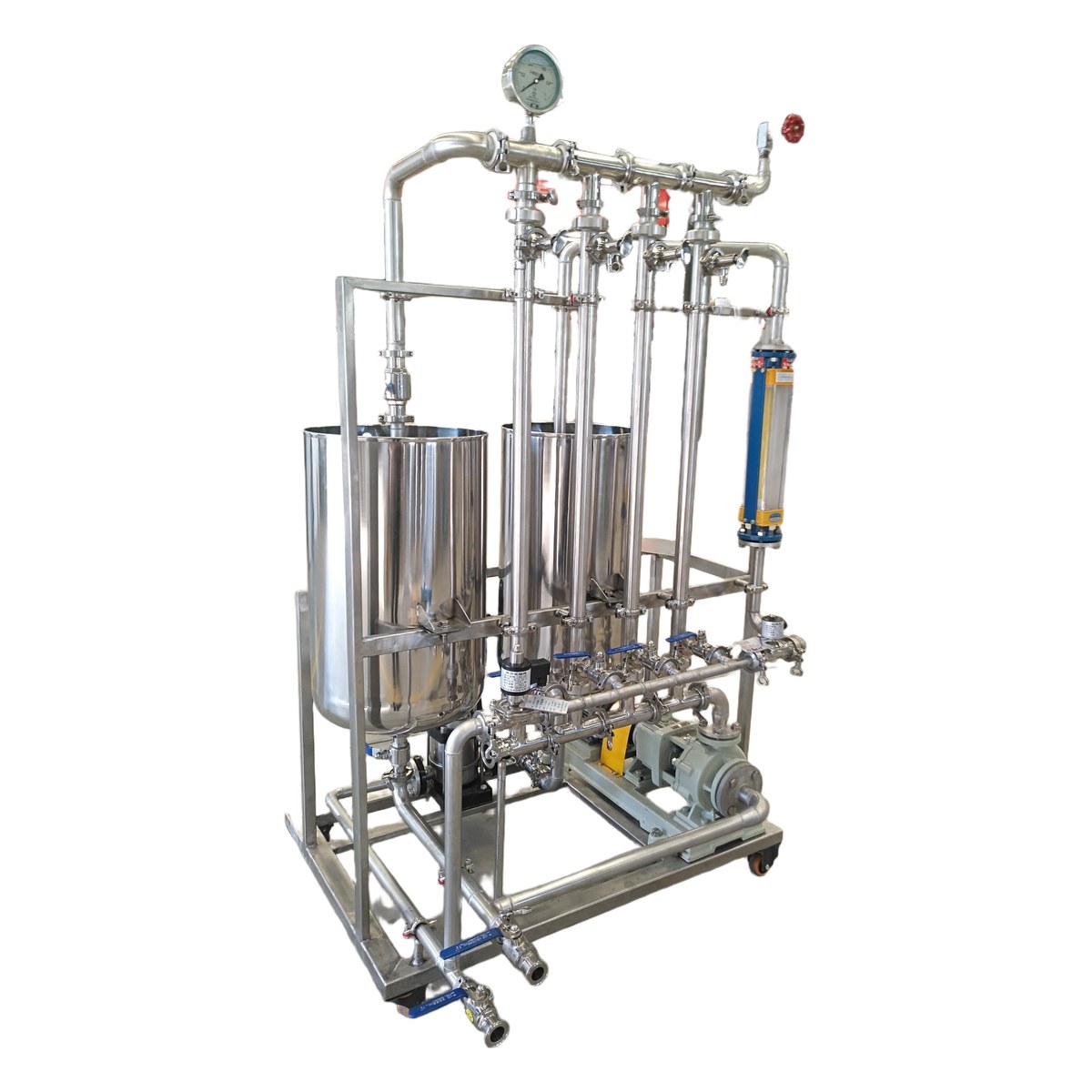
Ceramic Membrane System
Model: CM Series
1. Product Overview
A ceramic membrane is an inorganic separation membrane sintered at high temperature from alumina (Al₂O₃), zirconia (ZrO₂), titania (TiO₂) or silicon carbide (SiC). Built around ceramic membrane elements and operated in cross-flow mode, the system performs solid–liquid separation, turbidity and bacteria removal, and fractionation under pressure. Nominal pore sizes span 0.02–1.2 μm; permeate turbidity is ≤0.1 NTU with bacteria removal of ≥99.99% (MF grade) and ≥99.999% (UF grade). Ceramic membranes run continuously at pH 0–14 and 5–90 °C, and in oily, strongly acidic or alkaline streams where polymeric membranes cannot survive. Element service life is 5–10 years, and the elements can be repeatedly regenerated by chemical cleaning.
Key Features
- Inorganic ceramic material: resistant to pH 0–14, high temperature, chlorine and organic solvents
- Pore size 0.02–1.2 μm with stable separation precision; no extractables from the membrane
- Bacteria removal ≥99.99% (MF grade) / ≥99.999% (UF grade)
- Permeate turbidity ≤0.1 NTU
- Cross-flow operation: high flux, low fouling, tolerant of high-pressure backwash
- Element life 5–10 years, fully regenerable by CIP
2. Working Principle
Cross-flow Separation
The feed circulates inside the membrane channels at 1–5 m/s. Driven by 0.1–0.4 MPa, water and low-molecular components pass radially through the membrane wall as permeate, while suspended solids, colloids, bacteria and oil droplets are retained and returned with the concentrate. The shear force of the high-velocity cross-flow continuously sweeps the membrane surface, suppressing cake-layer growth and sustaining high flux over long runs.
Backwash & Chemical Cleaning
A backwash is performed every 15–60 minutes: permeate or compressed air at 0.4–0.6 MPa is pulsed backwards to detach the cake layer. When transmembrane pressure reaches the set point (typically 0.15–0.25 MPa), a CIP cycle is started — 1–2% NaOH removes organic and biological fouling, 0.5–1% HNO₃ or citric acid removes inorganic scale. CIP intervals are 1–4 weeks, with flux recovery of ≥95%.
3. System Classification
By Membrane Material
1. Alumina (Al₂O₃) ceramic membrane
2. Zirconia (ZrO₂) ceramic membrane
3. Titania (TiO₂) ceramic membrane
4. Silicon carbide (SiC) ceramic membrane
By Separation Precision
1. Ceramic microfiltration (MF, 0.1–1.2 μm)
2. Ceramic ultrafiltration (UF, 0.02–0.1 μm)
3. Ceramic nanofiltration (NF, MWCO 200–1000 Da)
By Configuration
1. Multi-channel tubular (19-channel / 37-channel)
2. Single-channel tubular
3. Flat sheet
4. Detailed Technical Parameters
Basic Parameters
| Parameter | Specification |
|---|---|
| Model | CM-5 / CM-20 / CM-100 |
| Capacity | 1–100 m³/h |
| Pore Size | 0.02–1.2 μm |
| Membrane Material | Al₂O₃ / ZrO₂ / TiO₂ / SiC |
| Operating Pressure | 0.1–0.4 MPa |
| Backwash Pressure | 0.4–0.6 MPa |
| Operating Temperature | 5–90 °C |
| pH Range | 0–14 |
| Permeate Turbidity | ≤0.1 NTU |
| Bacteria Removal | ≥99.99% (MF) / ≥99.999% (UF) |
Ceramic Membrane Parameters
| Model | Capacity(m³/h) | Area(m²) | Pressure(MPa) | Backwash(min) |
|---|---|---|---|---|
| CM-5 | 1–5 | 25 | 0.1–0.3 | 15–30 |
| CM-20 | 5–20 | 100 | 0.1–0.3 | 15–30 |
| CM-100 | 20–100 | 500 | 0.1–0.4 | 15–60 |
5. Core Component Selection
Ceramic Membrane Elements
Multi-channel tubular elements, OD 30–40 mm, channel ID 3–6 mm, 0.2–0.6 m² per element depending on channel count and length. Pore size is selected by separation target, material by medium corrosiveness and temperature. Brands include TAMI, Novasep, Pall and domestic suppliers.
Circulation Pump
Stainless-steel centrifugal pump in SUS304/SUS316L/duplex 2205 with VFD, delivering 1–5 m/s cross-flow velocity with head to cover TMP and pipework loss.
Backwash System
Backwash pump plus tank (or compressed-air buffer) at 0.4–0.6 MPa, at 2–3× the permeate flux.
CIP System
CIP tank with heater and dosing pump for NaOH, HNO₃/citric acid and NaClO, with automatic switching between alkaline, acidic and oxidative cleaning.
Control System
PLC with HMI touchscreen, automatic switching between filtration, backwash and CIP; online monitoring of TMP, flow, temperature and pH, with alarm at TMP limit and run-data logging.
6. Typical Application Fields
Oily Wastewater
Emulsions, cutting fluids, rolling emulsions — oil/water separation and concentration
Industrial Wastewater
Electroplating effluent, landfill leachate, coal-chemical and dyeing wastewater — solid/liquid separation and reuse
Food & Beverage
Clarification, cold sterilisation and concentration of juice, tea, wine and condiments, partly replacing filtration and pasteurisation
Pharmaceutical & Fermentation
Broth and cell separation, clarification of botanical extracts, enzyme concentration and desalting
Chemicals & New Materials
Catalyst recovery, nano-powder washing, solids recovery from acidic or alkaline streams
7. Design Standards and Certifications
The equipment is designed and built in compliance with the following standards and certifications:
1. GB/T 20103-2006 Membrane separation — Terminology
2. GB/T 32360-2015 Ultrafiltration membrane modules (reference for module performance testing)
3. GB 5749-2022 Standards for drinking water quality (potable-water applications)
4. ISO 9001/14001 quality and environmental management systems
5. CE marking for the EU market; NSF/ANSI 61 documentation available on request for potable-water wetted parts
8. Custom Optional Configurations
| Option | Details |
|---|---|
| Capacity | 1–100 m³/h |
| Membrane Material | Al₂O₃ / ZrO₂ / TiO₂ / SiC |
| Pore Size | 0.02 / 0.05 / 0.1 / 0.2 / 0.5 / 1.0 / 1.2 μm |
| Element Type | 19-ch / 37-ch multi-channel, single-channel, flat sheet |
| Operation | Cross-flow / concentrate bleed |
| Control | Manual / semi-auto / full-auto PLC |
| CIP | Alkaline / acidic / oxidative, combined |
9. Warranty Terms
| Status | Warranty | Scope |
|---|---|---|
| New equipment | 12 months | Membrane elements, pumps, control system |
| Ceramic elements | 12 months | Free replacement if flux or separation precision falls short; excludes misuse (dry running, mechanical impact, over-temperature/pressure) |
10. Packaging & Delivery
| Item | Packaging |
|---|---|
| Main Unit | Anti-rust treatment, plastic film wrap, wooden crate |
| Membrane Elements | Individual shock-proof packing with foam cushioning |
Lead time for new equipment: 30–60 working days.
11. Information Required for Inquiry
To receive an accurate quotation, please provide the following information:
Medium and required capacity (m³/h)
Feed characteristics (SS, oil content, COD, particle size distribution)
Required permeate quality or concentration ratio
Medium temperature and pH range
Corrosive constituents (acids, alkalis, solvents, chlorides)
Operation mode (batch / continuous)
Control mode preference
Local voltage and frequency
New / refurbished preference
Delivery terms and destination port