Bottle Line
Packaging Equipment
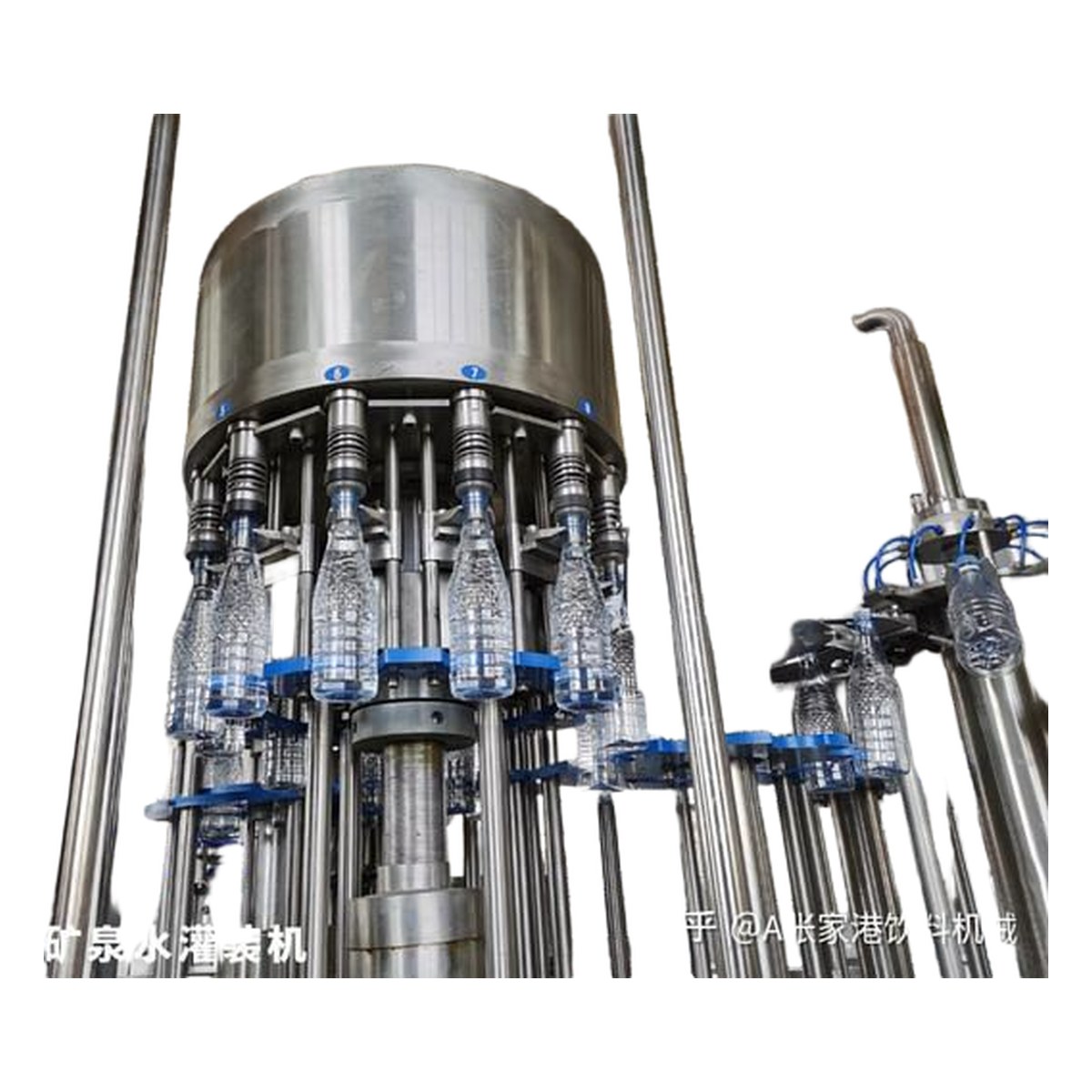
Bottling Line
Professional Packaging Equipment Supplier
1. Product Overview
The bottling line is a fully automated packaging production line integrating three major processes: bottle rinsing (washing), filling, and capping. It is primarily applied in PET and glass bottle packaging for beverages, drinking water, alcoholic drinks, condiments, and other liquid products. The bottling line employs an advanced PLC programmable control system and touchscreen HMI to achieve fully automated continuous production from empty bottle input to finished product output. It features compact structure, small footprint, low energy consumption, and high production efficiency. Through rational process layout and precise mechanical coordination, the three critical processes of rinsing, filling, and capping are seamlessly connected, effectively avoiding secondary contamination risks and ensuring product hygiene safety and packaging quality. Based on filling principles, bottling lines are classified into gravity filling, isobaric filling, vacuum filling, and flow meter filling types to accommodate various material characteristics and filling accuracy requirements.
2. Working Principle
The working principle of the bottling line is divided into three main stages: First, bottle rinsing — empty bottles are conveyed into the rinser, where bottle clamping mechanisms invert the bottles, and sterile water or ozone water is sprayed through nozzles to wash the inner walls multiple times (typically 2~4 water rinses + 1~2 purified water rinses). Rinse water is discharged through independent piping to prevent cross-contamination. After rinsing, the bottle clamps return bottles to upright position and transfer them to the filling station. Second, filling — filling valves perform quantitative filling based on the filling principle: gravity filling relies on liquid level differential for natural flow to the set level; isobaric filling first charges CO2 into the bottle to establish equal pressure before liquid flows in by gravity; vacuum filling draws liquid in by creating a pressure differential through vacuum; flow meter filling precisely controls filling volume through electromagnetic flow meters. Third, capping — filled bottles enter the capper, where a cap sorter aligns and feeds caps to the capping station, and capping heads descend to grip caps and tighten them onto bottle mouths at the set torque. The entire three-in-one process is synchronized by a single PLC system, with precise transfer between stations via star wheels and guide rails.
3. System Classification
3.1 Classification by Filling Principle
| Type | Filling Method | Applicable Products | Accuracy |
|---|---|---|---|
| Gravity Filling Line | Natural flow by liquid level difference | Pure water, spirits | ±2mm liquid level |
| Isobaric Filling Line | CO2 equal pressure before filling | Carbonated drinks, beer | ±2mm liquid level |
| Vacuum Filling Line | Vacuum pressure differential filling | Juice, soy sauce, vinegar | ±1mm liquid level |
| Flow Meter Filling Line | Electromagnetic flow meter dosing | Edible oil, detergent | ±0.5% volume |
3.2 Classification by Production Capacity
| Type | Production Capacity | Filling Valves | Application |
|---|---|---|---|
| Small Line | 2000~6000 BPH | 12~18 valves | Small enterprise/R&D |
| Medium Line | 6000~15000 BPH | 18~32 valves | Mid-size beverage companies |
| Large Line | 15000~36000 BPH | 32~72 valves | Major beverage groups |
| Mega Line | 36000~60000 BPH | 72~120 valves | Global beverage corporations |
4. Detailed Technical Parameters
4.1 Material of Product Contact Parts
| Component | Material | Surface Treatment | Characteristics |
|---|---|---|---|
| Filling Valve | SS316L | Electropolished Ra≤0.4μm | Corrosion-resistant, food-grade |
| Filling Tank | SS316L | Internal polish Ra≤0.6μm | Sanitary, easy to clean |
| Piping | SS304/316L | Sanitary fittings | FDA/GB4806 compliant |
| Bottle Clamp/Star Wheel | SS304 + food-grade plastic | Polished | Wear-resistant, bottle-safe |
| Capping Head | Alloy steel + silicone pad | Hardened | Secure grip, stable torque |
| Frame | SS304 | Brushed finish | Rust-proof, easy clean |
| Seals | EPDM/Silicone/FKM | Food-grade certified | Temp & chem resistant |
4.2 Specification Parameters
| Parameter | Small Line | Medium Line | Large Line |
|---|---|---|---|
| Production Capacity | 2000~6000 BPH | 6000~15000 BPH | 15000~36000 BPH |
| Applicable Bottle | Round/square PET/glass | Round/square PET/glass | Round PET/glass |
| Bottle Diameter | 50~95mm | 50~110mm | 50~110mm |
| Bottle Height | 150~320mm | 150~350mm | 150~350mm |
| Filling Temperature | Ambient~85°C | Ambient~95°C | Ambient~95°C |
| Filling Pressure | 0.1~0.4MPa | 0.1~0.5MPa | 0.1~0.5MPa |
| Compressed Air | 0.6~0.8MPa | 0.6~0.8MPa | 0.6~0.8MPa |
| Capping Torque | 5~25N·m adjustable | 5~25N·m adjustable | 5~25N·m adjustable |
| Total Power | 3~5kW | 5~10kW | 10~22kW |
| Machine Weight | 2000~3500kg | 3500~6000kg | 6000~12000kg |
| Dimensions (L×W×H) | 3500×2200×2500mm | 5000×2800×2800mm | 7000×3500~3000mm |
4.3 Performance Indicators
| Indicator | Parameter Value | Test Conditions |
|---|---|---|
| Filling Accuracy | Level error ±2mm / Volume error ±0.5% | Continuous rated speed |
| Capping Qualification Rate | ≥99.5% | Standard caps, normal operation |
| Bottle Breakage Rate | ≤0.3% | Normal operation |
| Noise Level | ≤80dB(A) | Measured at 1m |
| Changeover Time | 30~60 minutes | Including guide rail & star wheel change |
| CIP Cleaning Efficiency | Post-clean colony count ≤10CFU/100mL | Standard CIP cycle |
| MTBF | ≥5000 hours | Normal operating conditions |
| Equipment Availability | ≥95% | Annual statistics |
4.4 Electrical Parameters
| Item | Parameter |
|---|---|
| Power Supply | 3P+N+PE, AC380V±10%, 50Hz |
| Control Power | DC24V |
| Control System | Siemens S7-1500/Mitsubishi Q-series PLC |
| HMI | 12/15-inch touchscreen (Siemens/Weintek) |
| Inverter | Siemens G120/AB PowerFlex |
| Servo System | Siemens V90/Panasonic A6 |
| Sensors | Keyence/Omron/Sick |
| Safety Protection | E-stop, safety door, light curtain, overload |
| Communication | Profinet/Ethernet/IP/Modbus TCP |
Note: Electrical brands can be configured per customer requirements. Food-grade applications must comply with GB 4806 series standards.
5. Core Component Selection
| Component | Recommended Brand | Model | Function |
|---|---|---|---|
| PLC | Siemens S7-1500 | CPU 1515-2PN | Full-line logic control & interlock |
| Touchscreen | Siemens KTP1200 | 12-inch Profinet | Parameter setting & monitoring |
| Inverter | Siemens G120 | 2.2~7.5kW | Main motor speed control |
| Servo Motor | Siemens V90 | 0.75~2.0kW | Capping torque precision control |
| Filling Valve | SIMA Italy / domestic custom | Sanitary 316L | Isobaric/gravity/vacuum filling |
| Capping Head | ZALKIN Italy / domestic custom | Multi-head multi-channel | Cap gripping & tightening |
| Cylinder | SMC/Festo | Various specs | Pneumatic actuators |
| Gear Reducer | SEW/NORD | R/K series | Main drive reduction |
Note: Filling valve and capping head brands significantly impact machine performance; imported brands are recommended for quality assurance.
6. Typical Application Fields
Drinking Water Industry: Purified water and mineral water in PET bottles — the largest application area for bottling lines. Requires high-speed filling, precise liquid level, and hygiene safety using gravity filling.
Carbonated Beverage Industry: Cola, soda, and other carbonated drinks in PET bottles. Uses isobaric filling to prevent CO2 loss and foaming during filling.
Juice & Tea Beverage Industry: Hot filling (85~95°C) or aseptic cold filling for juices, teas, and functional beverages. Aseptic filling requires a sterile filling room.
Alcoholic Beverage Industry: Spirits, wine, and rice wine in glass bottles. Requires high filling precision with no dripping or foaming, typically using vacuum or isobaric filling.
Condiment Industry: Soy sauce, vinegar, and cooking oil bottling. Uses flow meter filling for precise volumetric measurement.
7 Design Standards & Certification
7. Design Standards and Certifications
| Standard Category | Standard No. | Standard Name |
|---|---|---|
| International | ISO 9001:2015 | Quality Management System |
| International | ISO 22000:2018 | Food Safety Management System |
| International | ISO 14120:2015 | Safety of Machinery — Guards |
| International | IEC 60204-1:2016 | Electrical Equipment of Machines |
| China | GB/T 19001-2016 | Quality Management System |
| China | GB 4806 Series | Food Contact Materials Standards |
| China | GB/T 5226.1-2019 | Electrical Safety of Machinery |
| Industry | CE | EU Machinery Directive 2006/42/EC |
| Industry | FDA | US Food Contact Material Regulations |
| Industry | 3-A Sanitary Standards | US Sanitary Equipment Standards |
8. Customization Options
| Option | Description | Application Scenario |
|---|---|---|
| Aseptic Cold Filling System | Sterile environment filling + H2O2 sterilization | Tea/juice/dairy |
| Hot Filling System | Heat-resistant bottle 85~95°C filling | Juice/tea beverages |
| CIP/SIP System | Full-auto CIP cleaning + SIP sterilization | Food/beverage sanitary production |
| Checkweigh & Rejection | Online weight check & reject non-conforming | Quality control |
| Level Detection System | Photoelectric/X-ray level detection | Filling accuracy control |
| Inkjet/Labeling Integration | Laser coding or labeling online | Product traceability |
| Multi-Format Flexible Changeover | Quick changeover system (within 30 min) | Multi-variety small batch |
| Full SS304 IP65 Enclosure | All SS304 + IP65 protection rating | Humid/corrosive environments |
9. Warranty Terms
| Warranty Item | Warranty Content |
|---|---|
| Machine Warranty Period | 12 months from acceptance date |
| Core Component Warranty | PLC/servo/filling valve/capping head: 24 months |
| Wearable Parts Warranty | Seals/bottle clamps/conveyor belt: 6 months |
| Software Upgrade | Free upgrade during warranty period |
| Technical Training | Free training for 3~5 operators during installation |
| After-Sales Response | Phone response within 2 hours, on-site within 24~48 hours |
| Spare Parts Supply | Guaranteed for 8 years after production discontinuation |
Note: Free repair and replacement during warranty for quality-related failures; damage caused by human factors or force majeure is excluded.
10. Packaging & Delivery
| Item | Description |
|---|---|
| Packaging Method | Modular moisture-proof film + wooden crate |
| Crate Specification | Export-grade plywood crate (fumigation-free) |
| Moisture Protection | Desiccant + vacuum aluminum foil bag |
| Shock Protection | EPE foam + bubble wrap cushioning |
| Lifting Method | 4-point top lifting |
| Transport Method | Truck/railway/ocean/container shipping |
Lead time: 60~90 working days after contract signing and deposit received. Installation & commissioning: Seller dispatches technicians for on-site installation, approximately 10~15 working days.
11. Inquiry Information Required
To receive an accurate quotation, please provide the following information:
Product name and properties (viscosity, CO2 content, temperature, etc.)
Bottle material (PET/glass) and specifications (diameter × height × neck finish)
Required production capacity (bottles/hour)
Filling method requirement (gravity/isobaric/vacuum/flow meter)
Filling volume and accuracy requirements
Cap type (plastic/aluminum/crown) and specifications
Production environment requirements (standard/clean/aseptic)
CIP/SIP system required?
Upstream equipment status (blow molder/water treatment, etc.)
Power supply and factory conditions (area/ceiling height/floor load)