Homogenizer
Liquid Preparation
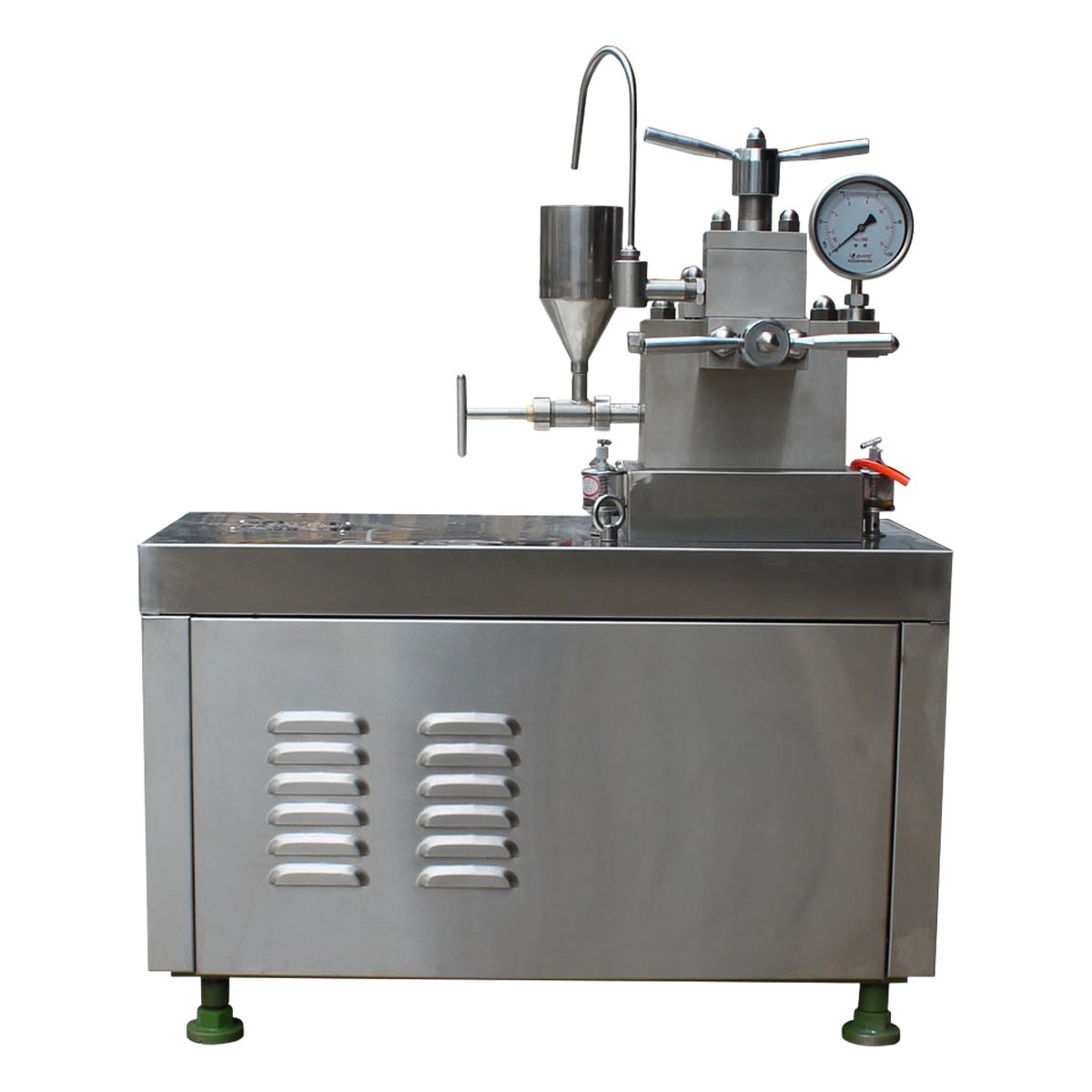
Homogenizer
1. Product Overview
1.1 General Description
A Homogenizer is a critical piece of pharmaceutical and industrial processing equipment designed to reduce the particle size and droplet diameter of substances within a liquid medium by applying high-pressure or mechanical force. The primary objective is to create a uniform and stable distribution of particles or droplets throughout the product, ensuring consistent quality, enhanced bioavailability, and extended shelf life.
In pharmaceutical manufacturing, homogenizers play an indispensable role in the production of emulsions, suspensions, liposomes, and nanosuspensions. By forcing the product through a precisely engineered narrow gap under extreme pressure, the homogenizer subjects the material to intense shear forces, impact forces, and cavitation effects, which collectively break down particles to the sub-micron or nanometer range.
1.2 Key Features
- High-efficiency particle size reduction down to nanometer scale
- Uniform and reproducible product quality batch after batch
- Adjustable homogenizing pressure for flexible processing
- Sanitary design compliant with GMP and FDA requirements
- CIP (Clean-in-Place) and SIP (Sterilize-in-Place) capable
- Low product retention volume minimizing waste
- Modular design for easy maintenance and valve replacement
- Touch-screen PLC control with real-time pressure monitoring
- Suitable for laboratory, pilot, and production-scale operations
- Available in multiple configurations to meet diverse application needs
1.3 Document Scope
This technical specification document covers the design, performance parameters, component selection, application fields, compliance standards, customization options, warranty terms, packaging, and inquiry requirements for the Homogenizer product line. It serves as a comprehensive reference for procurement, engineering evaluation, and technical communication.
2. Working Principle
2.1 High-Pressure Homogenization
High-pressure homogenization is the most widely adopted method in pharmaceutical and food industries. The process involves forcing the liquid product through a specially designed homogenizing valve assembly at pressures ranging from 10 MPa to over 200 MPa. As the product enters the narrow gap (typically 0.01–0.2 mm) between the valve seat and the valve head, it is subjected to three simultaneous disruptive forces:
- Shear Force: The extremely high velocity gradient across the narrow gap creates intense shear stresses that tear apart droplets and particles. Liquid velocities can reach 100–400 m/s within the gap.
- Impact Force: Upon exiting the gap, the high-velocity stream strikes the impact ring or valve wall at high speed, delivering a powerful mechanical impact that further fragments particles.
- Cavitation: The sudden pressure drop as the product enters the gap causes dissolved gases and volatile components to vaporize, forming microbubbles. These bubbles collapse violently when the pressure recovers downstream, generating shock waves and localized extreme temperatures that contribute to particle disruption.
2.2 Ultrasonic Homogenization
Ultrasonic homogenization utilizes high-frequency sound waves (typically 20–100 kHz) transmitted through a probe or bath to create alternating high-pressure and low-pressure cycles in the liquid. During the low-pressure phase, microscopic cavitation bubbles form; during the high-pressure phase, these bubbles collapse violently, producing intense local shear and shock waves. This method is particularly effective for small-volume, laboratory-scale processing and is well suited for cell disruption, nanoemulsion preparation, and dispersion of agglomerates.
2.3 Mechanical Homogenization
Mechanical homogenization employs rotating elements such as blades, rotors, or agitators within a stator housing to generate shear and turbulence. The rotor-stator design creates a high-velocity gradient between the rotating and stationary components, drawing material in and subjecting it to intense hydraulic shear. This method is commonly used for low-to-medium viscosity products and applications where extreme sub-micron particle size reduction is not required, such as dairy processing and beverage homogenization.
2.4 Process Flow
The typical homogenization process flow consists of the following stages: (1) Product feed from pre-mixing tank via low-pressure pump; (2) Pressurization by the high-pressure plunger pump to the set homogenizing pressure; (3) Passage through the first-stage homogenizing valve where primary size reduction occurs; (4) Optional second-stage valve for fine-tuning and stabilization; (5) Pressure recovery and product discharge; (6) Cooling through heat exchanger if temperature control is required; (7) Collection in the receiving vessel or continuation to downstream processing.
3. System Classification
3.1 Classification by Working Principle
| Type | Principle | Typical Pressure Range | Particle Size Achievable | Primary Applications |
|---|---|---|---|---|
| High-Pressure Homogenizer | Forced flow through narrow gap at high pressure; shear, impact, and cavitation | 10–200+ MPa | 50–500 nm | Pharmaceutical emulsions, liposomes, nanosuspensions |
| Ultrasonic Homogenizer | High-frequency sound wave-induced cavitation | 0.1–50 MPa (equivalent) | 100 nm–5 μm | Lab-scale nanoemulsions, cell disruption, dispersion |
| Mechanical (Rotor-Stator) Homogenizer | Hydraulic shear between rotating and stationary elements | 0.01–2 MPa (equivalent) | 1–50 μm | Dairy, beverages, general mixing |
3.2 Classification by Operating Pressure
| Category | Pressure Range | Typical Models | Key Characteristics | Common Applications |
|---|---|---|---|---|
| Low Pressure | ≤ 30 MPa | GJ-5, GJ-10 | Gentle processing, lower energy input, suitable for heat-sensitive products | Dairy homogenization, beverage processing, simple emulsions |
| Medium Pressure | 30–100 MPa | GJ-25, GJ-50 | Balanced performance, versatile range, good particle size reduction | Pharmaceutical emulsions, suspension homogenization, cosmetic formulations |
| High Pressure | ≥ 100 MPa | GJ-100, GJ-200 | Maximum size reduction, nano-range achievable, high energy input | Liposomes, nanosuspensions, injectable emulsions, cell disruption |
3.3 Classification by Application Field
| Application Field | Sub-categories | Special Requirements | Representative Products |
|---|---|---|---|
| Pharmaceutical | Injectable emulsions, liposomes, nanosuspensions, ointments | GMP compliance, sterile design, validation support, FDA 21 CFR Part 11 | Propofol emulsion, liposomal doxorubicin, nanosuspension APIs |
| Food & Beverage | Dairy, juices, sauces, plant-based milks | 3-A sanitary standards, food-grade materials, CIP capability | Milk homogenization, juice stabilization, soy milk processing |
| Chemical & Industrial | Paints, coatings, lubricants, agrochemicals | Corrosion resistance, explosion-proof options, high throughput | Paint dispersion, pesticide emulsions, lubricant formulation |
| Biotechnology | Cell disruption, protein extraction, vaccine adjuvants | Cold processing, sterile design, validated cleaning | E. coli disruption, yeast cell breakage, vaccine emulsion |
4. Detailed Technical Parameters
4.1 Basic Technical Parameters
| Parameter | GJ-5 | GJ-10 | GJ-25 | GJ-50 | GJ-100 | GJ-200 |
|---|---|---|---|---|---|---|
| Capacity (L/h) | 5 | 10 | 25 | 50 | 100 | 200 |
| Max. Pressure (MPa) | 0–200 | 0–200 | 0–150 | 0–150 | 0–100 | 0–100 |
| Motor Power (kW) | 1.5 | 2.2 | 4 | 7.5 | 15 | 75 |
| Plunger Diameter (mm) | 6 | 8 | 12 | 16 | 22 | 36 |
| Plunger Strokes (rpm) | 180 | 160 | 140 | 120 | 100 | 80 |
| Number of Plungers | 3 | 3 | 3 | 3 | 3 | 3 |
| Inlet Port (mm) | DN10 | DN10 | DN15 | DN15 | DN20 | DN25 |
| Outlet Port (mm) | DN6 | DN8 | DN10 | DN15 | DN20 | DN25 |
| Min. Feed Volume (mL) | 15 | 30 | 80 | 150 | 300 | 600 |
| Temperature Range (°C) | 5–80 | 5–80 | 5–80 | 5–80 | 5–80 | 5–80 |
4.2 High-Pressure Type Parameters
| Parameter | GJ-5H | GJ-10H | GJ-25H | GJ-50H |
|---|---|---|---|---|
| Max. Operating Pressure (MPa) | 200 | 200 | 180 | 150 |
| Working Pressure Range (MPa) | 20–200 | 20–200 | 20–180 | 20–150 |
| Pressure Stability (MPa) | ±1.0 | ±1.0 | ±1.5 | ±2.0 |
| Homogenizing Valve Stages | 1 or 2 | 1 or 2 | 1 or 2 | 1 or 2 |
| Valve Material | Tungsten carbide / Ceramic | Tungsten carbide / Ceramic | Tungsten carbide / Ceramic | Tungsten carbide / Ceramic |
| Particle Size Range (nm) | 50–500 | 50–500 | 80–800 | 100–1000 |
| Max. Inlet Temperature (°C) | 80 | 80 | 80 | 80 |
| Pump Seal Type | Packed gland / Mechanical | Packed gland / Mechanical | Packed gland / Mechanical | Packed gland / Mechanical |
| Cooling Method | Jacket cooling | Jacket cooling | Jacket cooling | Jacket cooling |
| Control Mode | PLC + Touch screen | PLC + Touch screen | PLC + Touch screen | PLC + Touch screen |
4.3 Medium-Pressure Type Parameters
| Parameter | GJ-100M | GJ-200M | GJ-500M | GJ-1000M |
|---|---|---|---|---|
| Max. Operating Pressure (MPa) | 100 | 80 | 60 | 40 |
| Working Pressure Range (MPa) | 5–100 | 5–80 | 5–60 | 5–40 |
| Capacity Range (L/h) | 60–120 | 120–250 | 300–600 | 600–1200 |
| Motor Power (kW) | 15 | 22 | 37 | 55 |
| Homogenizing Valve Stages | 2 | 2 | 2 | 2 |
| Valve Material | Stainless steel 316L / Tungsten carbide | SS 316L / WC | SS 316L / WC | SS 316L / WC |
| Particle Size Range (μm) | 0.2–5 | 0.3–8 | 0.5–10 | 1–15 |
| CIP Compatibility | Yes | Yes | Yes | Yes |
| SIP Compatibility | Optional | Optional | Optional | Optional |
4.4 Dimensions and Weight
| Model | Length (mm) | Width (mm) | Height (mm) | Net Weight (kg) | Floor Space (m²) |
|---|---|---|---|---|---|
| GJ-5 | 850 | 650 | 1050 | 180 | 0.6 |
| GJ-10 | 900 | 680 | 1100 | 220 | 0.7 |
| GJ-25 | 1050 | 750 | 1200 | 380 | 0.9 |
| GJ-50 | 1200 | 850 | 1300 | 550 | 1.1 |
| GJ-100 | 1500 | 1000 | 1450 | 950 | 1.8 |
| GJ-200 | 2000 | 1300 | 1650 | 2200 | 3.2 |
4.5 Material Characteristics
| Component | Material | Standard | Surface Finish (Ra) | Notes |
|---|---|---|---|---|
| Product-contact body | SS 316L | ASTM A240/A312 | ≤ 0.4 μm | Electropolished |
| Homogenizing valve (standard) | Tungsten carbide (WC) | ISO 4499 | ≤ 0.2 μm | Extreme wear resistance |
| Homogenizing valve (optional) | Silicon nitride ceramic | ISO 6474 | ≤ 0.1 μm | For abrasive products |
| Plungers | SS 316L + ceramic coating | ASTM A240 | ≤ 0.2 μm | Hard-chrome or ceramic coated |
| Seals (standard) | PTFE / EPDM | FDA 21 CFR 177 | — | Food/pharma grade |
| Seals (optional) | FFKM (Kalrez) | FDA compliant | — | For aggressive solvents |
| Pump body | SS 316L forged | ASTM A182 | ≤ 0.4 μm | Forged for high pressure |
| Frame / Housing | SS 304 | ASTM A240 | Brushed finish | Non-product contact |
| Pipe fittings | SS 316L tri-clamp | ISO 2037 / ASME BPE | ≤ 0.4 μm | Sanitary connections |
5. Core Component Selection
5.1 Homogenizing Valve / Head
The homogenizing valve is the heart of the homogenizer, where the actual particle size reduction takes place. The valve assembly consists of a valve seat and a valve head (or valve stem) that together form the narrow gap through which the product is forced at high velocity. The design, material, and geometry of the valve directly determine the homogenizing efficiency and final particle size distribution.
- Standard valve: Tungsten carbide (WC) seat and head for general pharmaceutical and food applications — excellent wear resistance and long service life
- Ceramic valve: Silicon nitride (Si₃N₄) for highly abrasive or corrosive products — superior chemical resistance and ultra-fine surface finish
- Diamond-coated valve: Polycrystalline diamond (PCD) for extreme wear applications — longest service life, highest cost
- Single-stage valve: One homogenizing zone — suitable for simple emulsification and when only moderate size reduction is needed
- Two-stage valve: First stage for primary size reduction, second stage for fine-tuning and stabilization — recommended for pharmaceutical emulsions and liposomes
5.2 High-Pressure Pump
The high-pressure pump is the driving force of the homogenizer, responsible for pressurizing the product to the desired homogenizing pressure. A triplex plunger pump design is the industry standard, providing smooth and pulsation-minimized flow.
- Type: Triplex (3-plunger) positive displacement pump for even flow distribution
- Plunger material: SS 316L with ceramic or hard-chrome coating for wear and corrosion resistance
- Seal options: Packed gland (adjustable, field-replaceable) or mechanical seal (leak-free, longer life)
- Pressure rating: Up to 200 MPa depending on model
- Lubrication: Forced-feed lubrication system for crankshaft and bearings
- Drive: V-belt or direct coupling with gear reducer for smooth power transmission
5.3 Cooling System
Homogenization generates significant heat due to the conversion of pressure energy into thermal energy. A temperature rise of approximately 2–3°C per 10 MPa of pressure is typical. Effective cooling is essential to protect heat-sensitive products and maintain product quality.
- Jacket cooling: Cooling jacket surrounding the homogenizing valve and pump head — connected to chilled water or glycol circuit
- Heat exchanger: Shell-and-tube or plate heat exchanger installed downstream for post-homogenization cooling
- Cooling medium: Chilled water (5–15°C) or propylene glycol solution (down to -5°C)
- Temperature monitoring: PT100 sensors at inlet and outlet for real-time temperature control and alarm
- Flow control: Automatic cooling valve regulated by PLC based on product outlet temperature
5.4 Control System
Modern homogenizers are equipped with advanced control systems that ensure precise, repeatable, and validated operation. The control system architecture typically includes:
- PLC: Industrial programmable logic controller (e.g., Siemens S7, Allen-Bradley) for sequence control, pressure regulation, and safety interlocks
- HMI: 7-inch or 10-inch color touch screen for operator interface — displays real-time pressure, temperature, flow rate, and motor status
- Pressure control: Closed-loop PID control of homogenizing pressure via servo motor or proportioning valve — pressure stability ±1% of set point
- Data logging: Electronic batch records with time-stamped pressure, temperature, and flow data — compliant with FDA 21 CFR Part 11
- Recipe management: Up to 100 configurable recipes with password-protected parameters for different products
- Alarm system: Multi-level alarms for over-pressure, under-pressure, over-temperature, motor overload, and seal failure
- Communication: Ethernet/IP, Modbus TCP, or OPC UA for integration with SCADA/MES systems
5.5 Safety Protection
Safety is paramount in high-pressure equipment design. The following safety features are standard or available:
- Mechanical pressure relief valve: Spring-loaded relief valve set at 110% of maximum working pressure — provides instantaneous pressure relief without electronic intervention
- Rupture disc: Backup pressure relief device for catastrophic over-pressure protection
- Emergency stop: Mushroom-head E-stop button on control panel and remote stations — immediately shuts down the motor and de-pressurizes the system
- Motor overload protection: Thermal and electronic overload relay to prevent motor damage
- Guard interlocks: Safety guards on all moving parts with interlock switches — machine stops if guard is opened during operation
- Zero-pressure start: System cannot be started under pressure; must be de-pressurized before restart
- Leak detection: Sensors in seal drain area to detect plunger seal leakage and trigger alarm
- Sound enclosure: Optional acoustic enclosure to reduce noise levels below 85 dB(A) at 1 m distance
6. Typical Application Fields
6.1 Pharmaceutical Industry
The pharmaceutical industry is the most demanding application sector for homogenizers, requiring strict compliance with GMP regulations and the ability to produce sterile, stable, and consistently sized products.
- Injectable Emulsions: Propofol, fat emulsion (Intralipid-type), vitamin E emulsion — particle size 200–500 nm, PDI < 0.15
- Liposomes: Doxorubicin liposome, amphotericin B liposome, vaccine adjuvants — particle size 80–200 nm, encapsulation efficiency > 90%
- Nanosuspensions: Poorly water-soluble API nanoparticles — particle size 100–500 nm, zeta potential > ±30 mV
- Topical and Ophthalmic Emulsions: Cyclosporine ophthalmic emulsion, corticosteroid creams — uniform droplet distribution for consistent dosing
- Sterile Product Processing: Aseptic homogenizer configurations with steam SIP capability for terminal sterilization bypass
6.2 Food and Beverage Industry
- Dairy: Milk homogenization (prevent cream separation), cream processing, yogurt base preparation — standard pressure 15–25 MPa
- Beverages: Fruit juice stabilization, plant-based milk (soy, almond, oat) — improved mouthfeel and shelf stability
- Sauces and Dressings: Mayonnaise, salad dressing, ketchup — smooth texture and phase stability
- Functional Foods: Omega-3 emulsions, vitamin-fortified beverages — enhanced bioavailability through nanoemulsion technology
6.3 Chemical Industry
- Paints and Coatings: Pigment dispersion, latex emulsion production — reduced particle size for smoother finish and better coverage
- Agrochemicals: Pesticide emulsions, herbicide suspensions — improved sprayability and efficacy
- Lubricants: Grease formulation, cutting fluid emulsions — stable oil-in-water emulsions
- Adhesives: Emulsion polymerization for acrylic and vinyl acetate adhesives
6.4 Biotechnology
- Cell Disruption: E. coli, yeast (S. cerevisiae, P. pastoris), mammalian cells — protein release efficiency > 90% at 100–150 MPa
- Protein Extraction: Recombinant protein recovery, enzyme extraction — high yield with minimal heat denaturation
- Vaccine Production: Adjuvant emulsion (MF59-type), antigen-carrier complexes — sterile, validated process
- Nanoparticle Drug Delivery: PLGA nanoparticles, solid lipid nanoparticles (SLN) — controlled particle size for targeted delivery
7. Design Standards and Certifications
7.1 GMP Compliance
All product-contact components are designed and manufactured in compliance with current Good Manufacturing Practice (GMP) guidelines. Equipment design facilitates easy cleaning, eliminates dead legs (> 1.5D compliance), and provides full traceability of materials and manufacturing processes. Surface finishes meet pharmaceutical requirements with Ra ≤ 0.4 μm for product-contact surfaces.
7.2 FDA 21 CFR Part 11
The control system complies with FDA 21 CFR Part 11 requirements for electronic records and electronic signatures. Key features include: audit trail for all parameter changes, user authentication with role-based access control, time-stamped electronic batch records, data integrity verification, and secure data export in compliant formats.
7.3 ISO 9001
Manufacturing facilities are ISO 9001:2015 certified, ensuring consistent quality management systems across design, procurement, production, testing, and after-sales service. All critical processes are documented and controlled under the quality management system.
7.4 CE Marking
Equipment meets the essential health and safety requirements of the EU Machinery Directive (2006/42/EC), Pressure Equipment Directive (2014/68/EU), and Low Voltage Directive (2014/35/EU). CE marking is applied to all models destined for the European market.
7.5 3-A Sanitary Standards
Product-contact surfaces conform to 3-A Sanitary Standards for dairy and food processing equipment. This includes requirements for surface finish, cleanability, drainability, and material compatibility with food products.
7.6 ASME BPE
Process contact components comply with ASME BPE (Bioprocessing Equipment) standards, including requirements for surface finish (SF1–SF4), dimensional tolerances, and material certifications. Welds meet ASME BPE requirements for tube OD and wall thickness.
7.7 Certification Summary
| Standard / Certification | Scope | Compliance Level | Certificate / Report |
|---|---|---|---|
| GMP (cGMP) | Design, manufacturing, documentation | Full compliance | GMP compliance certificate |
| FDA 21 CFR Part 11 | Electronic records, audit trail, access control | Full compliance | Validation documentation package |
| ISO 9001:2015 | Quality management system | Certified | ISO 9001 certificate |
| CE Marking | Machinery, pressure equipment, low voltage directives | Compliant | Declaration of Conformity |
| 3-A Sanitary Standards | Product-contact design, cleanability | Compliant | 3-A Third Party Verification |
| ASME BPE | Bioprocessing equipment design | Compliant | Material and dimensional certificates |
| ISO 14120 | Safety guards and protective devices | Compliant | Guard interlock certificates |
| ATEX (optional) | Explosion-proof for Zone 1/2 | Optional | ATEX certificate |
8. Customizable Options
The homogenizer product line offers extensive customization to meet specific process requirements, regulatory environments, and facility constraints. The following table summarizes available customization options:
| No. | Customization Item | Available Options | Default Configuration | Impact on Lead Time |
|---|---|---|---|---|
| 1 | Homogenizing Valve Material | Tungsten carbide / Silicon nitride ceramic / Diamond-coated / SS 316L | Tungsten carbide | +2–4 weeks for ceramic/diamond |
| 2 | Seal Material | PTFE / EPDM / FKM (Viton) / FFKM (Kalrez) / Silicone | PTFE + EPDM | +1–2 weeks for FFKM |
| 3 | Pressure Range | 0–40 MPa / 0–100 MPa / 0–150 MPa / 0–200 MPa / Custom | Per model standard | +1–2 weeks for custom range |
| 4 | Control System | Standard PLC + HMI / Siemens S7 / Allen-Bradley / Full SCADA integration | Standard PLC + 7" HMI | +2–4 weeks for SCADA |
| 5 | CIP/SIP Capability | CIP only / CIP + SIP / Manual clean only | CIP capable | +2–3 weeks for SIP |
| 6 | Explosion-proof Rating | Standard / ATEX Zone 1 / ATEX Zone 2 / NEC Class I Div 1 | Standard | +3–4 weeks for Ex-proof |
| 7 | Cooling System | Jacket cooling / Jacket + heat exchanger / Refrigerated recirculation chiller | Jacket cooling | +1–3 weeks for chiller |
| 8 | Noise Enclosure | None / Partial enclosure / Full acoustic enclosure (< 75 dB) | None | +2–3 weeks |
| 9 | Material Certification | Standard mill cert / EN 10204 3.1 / 3.2 / FDA material compliance letter | Standard mill cert (3.1) | +1 week for 3.2 |
| 10 | Documentation Package | Standard (manual + drawings) / GMP documentation / Full validation (IQ/OQ/PQ) | Standard | +4–8 weeks for full validation |
9. Warranty Terms
9.1 Standard Warranty
The manufacturer provides a standard warranty covering defects in material and workmanship under normal use and proper maintenance. The warranty periods are as follows:
| Warranty Category | Duration | Coverage Scope | Conditions |
|---|---|---|---|
| Main Equipment Warranty | 12 months | All components including pump, valves, motor, frame, and control system | From date of commissioning or 14 months from shipment, whichever comes first |
| Extended Warranty (optional) | 24 months | Same as standard warranty with extended duration | Must be purchased at time of order; additional cost applies |
| Consumable Parts Warranty | 6 months | Seals, gaskets, O-rings, valve seats, and plunger packing | From date of shipment; normal wear excluded |
9.2 Warranty Exclusions
- Damage caused by misuse, negligence, improper installation, or operation outside specified parameters
- Normal wear and tear of consumable components (seals, packing, valve seats)
- Damage caused by processing products not compatible with the equipment materials of construction
- Unauthorized modifications, repairs, or use of non-original spare parts
- Damage caused by inadequate maintenance or failure to follow prescribed maintenance schedules
- Consequential or incidental damages, including production losses and product damage
9.3 Warranty Service
- Remote technical support available within 4 hours of notification during business hours
- On-site service response within 48 hours for domestic customers, 5 business days for international customers
- Free replacement of defective parts during warranty period (shipping costs included for domestic)
- Software updates provided free of charge during warranty period
10. Packaging and Delivery
10.1 Packaging
All homogenizers are packaged in compliance with international shipping standards to ensure safe transport and delivery. Packaging specifications are as follows:
- Export-grade wooden crate (ISPM 15 compliant, heat-treated, stamped)
- Equipment secured with heavy-duty strapping and foam cushioning
- Moisture barrier: VCI (Vapor Corrosion Inhibitor) film wrap for corrosion protection during transit and storage
- Desiccant packs placed inside the crate for humidity control
- All openings sealed with protective caps to prevent contamination
- Lifting lugs clearly marked and accessible for crane/forklift handling
- Documentation pouch attached to the exterior of the crate containing packing list, certificate of origin, and inspection reports
10.2 Shipping and Delivery
| Item | Details |
|---|---|
| Standard Lead Time | 8–12 weeks from order confirmation (standard configuration) |
| Custom Configuration Lead Time | 12–20 weeks depending on customization scope |
| Incoterms | FOB Shanghai / CIF / DAP (as agreed) |
| Shipping Method | Sea freight (standard), air freight (urgent, additional cost) |
| Shipping Marks | Per customer specification; default includes model, PO number, destination |
| Insurance | All-risk marine cargo insurance included for CIF terms; optional for FOB |
| Installation Support | Optional on-site installation and commissioning service (separate quotation) |
10.3 Storage Requirements
- Store in a dry, covered area with ambient temperature 5–40°C and relative humidity < 75%
- Do not stack crates; keep original packaging until installation
- Inspect VCI wrap integrity every 3 months for long-term storage (> 6 months)
- Rotate plunger pump manually every 2 months during extended storage to prevent seal deformation
11. Information Required for Inquiry
To provide an accurate and comprehensive quotation, please supply the following information when submitting an inquiry. Incomplete information may result in delays or assumptions that may not match your requirements.
| No. | Required Information | Description / Example | Importance |
|---|---|---|---|
| 1 | Product Details | Product name, formulation type (emulsion/suspension/liposome/nanosuspension), viscosity range, pH, and any special characteristics (e.g., abrasive, corrosive, oxygen-sensitive) | Critical |
| 2 | Required Capacity | Batch size (L) or continuous flow rate (L/h), number of batches per day, desired processing time per batch | Critical |
| 3 | Target Particle Size | Desired mean particle size (D50), PDI requirement, and acceptable size range (D10–D90) | Critical |
| 4 | Operating Pressure | Required maximum homogenizing pressure (MPa) or number of passes at a given pressure | Critical |
| 5 | Temperature Sensitivity | Maximum allowable product temperature, cooling requirements, heat sensitivity of the product | High |
| 6 | Regulatory Requirements | GMP class (e.g., GMP Class A/B/C), FDA compliance, CE marking, ATEX, ASME BPE, 3-A | High |
| 7 | Utility Specifications | Available electrical supply (V/Hz/ph), compressed air pressure, cooling water temperature and flow rate, clean steam availability | High |
| 8 | Installation Environment | Room dimensions, floor loading capacity, available crane/lifting capacity, noise level requirements, explosion-proof area classification | Medium |
Please complete the above information and send your inquiry to the sales engineering team. Our technical specialists will review your requirements and provide a detailed technical proposal and quotation within 5–10 business days.
End of Document