Waste Gas Treatment
Environmental Equipment
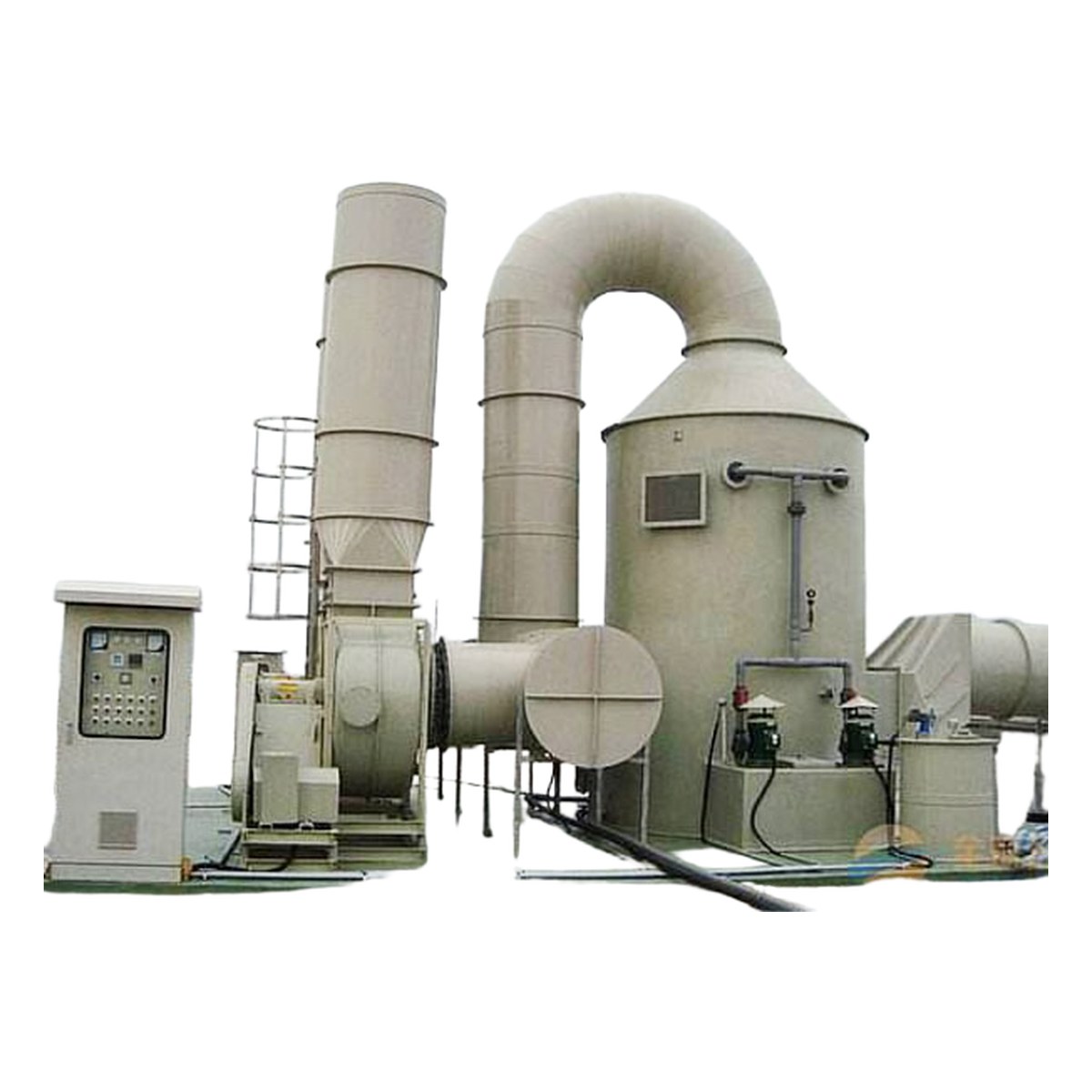
Waste Gas Treatment Equipment
Professional Environmental Equipment Supplier
1. Product Overview
Waste gas treatment equipment refers to complete treatment systems used to remove harmful gases and volatile organic compounds (VOCs) emitted during industrial production processes. These systems comprehensively apply multiple technical methods including absorption, adsorption, combustion, and biological treatment, designing and combining optimal treatment process routes based on the composition, concentration, and emission characteristics of different waste gases. The equipment is widely used in chemical, pharmaceutical, coating, printing, and food processing industries, serving as a key facility for industrial enterprises to achieve environmental compliance. The waste gas treatment system typically consists of gas collection hoods, ductwork, pre-treatment units, core treatment units, exhaust stacks, and online monitoring systems. It can be flexibly configured for different operating conditions, meeting various treatment requirements from low-concentration high-volume to high-concentration low-volume waste gases. With its technical diversity, flexible process combination, and high-efficiency purification capability, waste gas treatment equipment has become an indispensable core asset in modern industrial environmental protection.
2. Working Principle
The working principle of waste gas treatment equipment varies depending on the treatment technology employed: The adsorption method utilizes the large specific surface area of porous materials such as activated carbon and molecular sieves to physically adsorb organic molecules from waste gas into their pores, suitable for low-concentration high-volume organic waste gas. The absorption method relies on gas-liquid mass transfer between the scrubbing liquid and the gas stream to move pollutants into the liquid phase, suitable for acid-base and water-soluble gases. The combustion method (including RTO, RCO, TO, etc.) decomposes organic compounds into CO2 and H2O through high-temperature oxidation, suitable for medium-to-high concentration organic waste gas. The biological method uses microbial metabolic action to degrade organic pollutants, suitable for low-concentration biodegradable waste gas. The low-temperature plasma method uses high-energy electrons to activate free radicals that oxidize pollutants. In practice, multi-technology combined processes are commonly used, such as 'pre-treatment + activated carbon adsorption + catalytic combustion' or 'spray absorption + biofiltration', to achieve optimal treatment effectiveness and operational economy.
3. System Classification
3.1 Classification by Treatment Method
| Type | Treatment Method | Applicable Waste Gas | Purification Efficiency |
|---|---|---|---|
| Adsorption Method | Activated carbon/molecular sieve adsorption | Low-concentration VOCs | 90~99% |
| Absorption Method | Spray/packed tower absorption | Acid-base/water-soluble gas | 95~99% |
| Combustion Method | RTO/RCO high-temperature oxidation | Medium-high concentration VOCs | 97~99.9% |
| Biological Method | Biofilter/biotrickling filter | Low-concentration biodegradable gas | 80~95% |
| Plasma Method | Dielectric barrier discharge | Multi-component complex gas | 70~90% |
3.2 Classification by Gas Type
| Type | Main Components | Recommended Process | Emission Standard |
|---|---|---|---|
| Organic Waste Gas | VOCs, benzene series | Adsorption + catalytic combustion | GB 37822 |
| Inorganic Waste Gas | HCl, SO2, NOx | Spray absorption | GB 16297 |
| Odorous Gas | H2S, NH3 | Biological + UV photo-oxidation | GB 14554 |
| Dust Waste Gas | Particulate matter | Bag/cyclone dust removal | GB 16297 |
4. Detailed Technical Parameters
4.1 Main Component Materials
| Component | Material | Surface Treatment | Characteristics |
|---|---|---|---|
| Activated Carbon | Coconut shell/coal-based | Activation treatment | Large surface area, strong adsorption |
| Catalyst | Pt-Pd/ceramic carrier | Impregnation and calcination | Low ignition temp, high conversion |
| Packing Media | PP/ceramic | Injection molding/sintering | Corrosion-resistant, high capacity |
| Fan | SS304/FRP | Polished/hand lay-up | Corrosion-resistant, high volume |
| Pump | SS304/316L | Mechanical seal | Corrosion-resistant, stable |
| PLC Cabinet | Cold-rolled steel | Powder coated | Protection class IP55 |
4.2 Specification Parameters
| Parameter | Adsorption Type | Combustion Type | Biological Type |
|---|---|---|---|
| Treatment Volume | 500~200000m³/h | 500~100000m³/h | 1000~80000m³/h |
| System Resistance | 500~1500Pa | 1500~3000Pa | 500~2000Pa |
| Purification Efficiency | 90~99% | 97~99.9% | 80~95% |
| Operating Temperature | Ambient~60°C | 250~800°C | 15~40°C |
| Operating Cost | 2~8 CNY/1000m³ | 5~15 CNY/1000m³ | 0.5~3 CNY/1000m³ |
| Footprint | Medium | Large | Large |
4.3 Performance Indicators
| Indicator | Parameter Value | Test Conditions |
|---|---|---|
| Compliance Rate | ≥99% | Under design conditions |
| Treatment Efficiency | 90~99.9% | Depending on process type |
| Operating Cost | 0.5~15 CNY/1000m³ | Depending on process type |
| MTBF | ≥4000 hours | Normal operating conditions |
| Equipment Availability | ≥95% | Annual statistics |
4.4 Electrical Parameters
| Item | Parameter |
|---|---|
| Power Supply | 3P AC380V±10%, 50Hz |
| Control System | PLC/DCS automatic control |
| Online Monitoring | VOCs/pH/flow online monitoring |
| VFD | VFD for fan control |
| Safety Protection | E-stop, over-temperature alarm, leak alarm |
| Communication | Ethernet, RS485, Modbus/Profibus optional |
| Data Logging | Automatic operation data recording and storage |
Note: Electrical component brands can be substituted with equivalent alternatives upon request.
5. Core Component Selection
| Component | Recommended Brand | Model | Function |
|---|---|---|---|
| Activated Carbon | Coconut shell/coal-based | Columnar/honeycomb | VOCs adsorption purification |
| Catalyst | Pt-Pd/ceramic carrier | Honeycomb ceramic | Catalytic oxidation of organics |
| Packing Media | PP Pall ring/ceramic | DN50/DN76 | Increase gas-liquid contact area |
| Fan | AERZEN/Nanfeng | Roots/centrifugal series | Waste gas transport and draft |
| Pump | CNP/Southern Pump | IH/FS series | Circulation liquid transport |
| PLC Control System | Siemens | S7-1200/S7-1500 | System logic control & data management |
| Online Monitor | RMES/Sailhero | VOCs/pH/flow | Real-time emission monitoring |
Note: Core component brands can be configured per customer specification with prior confirmation.
6. Typical Application Fields
Chemical Industry: Treatment of VOCs waste gas from reaction, distillation, and drying processes, using adsorption + catalytic combustion combined process, meeting GB 37822 emission standards while balancing compliance and operational economy.
Pharmaceutical Industry: Treatment of solvent-containing and acid-base waste gas from reaction vessels, dryers, and cleanroom exhaust, multi-technology combined process ensuring comprehensive compliance.
Coating Industry: Treatment of paint mist and VOCs waste gas from spray booths and drying ovens, using dry filtration + activated carbon adsorption + catalytic combustion process.
Printing Industry: Treatment of VOCs waste gas from printing, laminating, and coating processes, using zeolite rotor concentration + RTO process for high-volume low-concentration conditions.
Food Processing Industry: Treatment of cooking oil fumes and odorous gas from baking, frying, and fermentation processes, using electrostatic oil removal + biofiltration combined process.
7 Design Standards & Certification
7. Design Standards and Certifications
| Standard Category | Standard No. | Standard Name |
|---|---|---|
| China | GB 16297-1996 | Comprehensive Emission Standard for Air Pollutants |
| China | GB 37822-2019 | Standard for Control of Fugitive VOCs Emissions |
| China | GB 31571-2015 | Emission Standard for Petrochemical Industry |
| China | GB 14554-93 | Emission Standard for Odor Pollutants |
| International | ISO 9001:2015 | Quality Management System Requirements |
| International | ISO 14001:2015 | Environmental Management System Requirements |
8. Customization Options
| Option | Description | Application Scenario |
|---|---|---|
| Zeolite Rotor Concentration | Concentrates high-volume, low-conc. gas into a low-volume, high-conc. stream | Printing/coating VOCs |
| RTO Regenerative Incineration | 95%+ heat recovery efficiency | Medium-high concentration organics |
| RCO Catalytic Combustion | Lower ignition temperature for reduced energy use | Gas suitable for catalytic treatment |
| UV Photolysis + Activated Carbon | UV photolysis + carbon adsorption | Low-concentration odorous gas |
| Biofilter | Microbial degradation of organics | Biodegradable low-concentration gas |
| Online Monitoring System | VOCs/particulate/flow online monitoring | Environmental online supervision |
| Remote Monitoring Platform | IoT remote O&M platform | Multi-plant/remote management |
| Explosion-Proof Configuration | ExdIIBT4 explosion-proof rating | Flammable/explosive gas environment |
9. Warranty Terms
| Warranty Item | Warranty Content |
|---|---|
| Machine Warranty Period | 12 months from acceptance date |
| Core Component Warranty | PLC/fan/catalyst: 24 months |
| Wearable Parts Warranty | Activated carbon/filter media/seals: 6 months |
| Software Upgrade | Free upgrade during warranty period |
| Technical Training | Free training for 2~3 operators during installation |
| After-Sales Response | Phone response within 2 hours, on-site within 24~48 hours |
| Spare Parts Supply | Guaranteed for 5 years after production discontinuation |
Note: Free repair and replacement during warranty for quality-related failures; damage caused by human factors or force majeure is excluded.
10. Packaging & Delivery
| Item | Description |
|---|---|
| Packaging Method | Machine wrapped in moisture-proof film + wooden crate |
| Crate Specification | Export-grade plywood crate (fumigation-free) |
| Moisture Protection | Desiccant + vacuum aluminum foil bag |
| Shock Protection | EPE foam + bubble wrap cushioning |
| Lifting Method | 4-point top lifting |
| Transport Method | Truck/railway/ocean shipping |
Lead time: 45~60 working days after contract signing and deposit received. Installation & commissioning: Seller dispatches technicians for on-site installation, approximately 5~7 working days.
11. Inquiry Information Required
To receive an accurate quotation, please provide the following information:
Waste gas composition and concentration (mg/m³)
Waste gas treatment volume (m³/h)
Waste gas temperature and humidity
Emission standard requirements (national/local)
Production shifts and operating hours
Site space constraints (L×W×H)
Existing ductwork and exhaust stack conditions
Power supply and compressed air specifications
Whether online monitoring system is required
Other special customization requirements