Glass-lined Reactor
Reaction Equipment
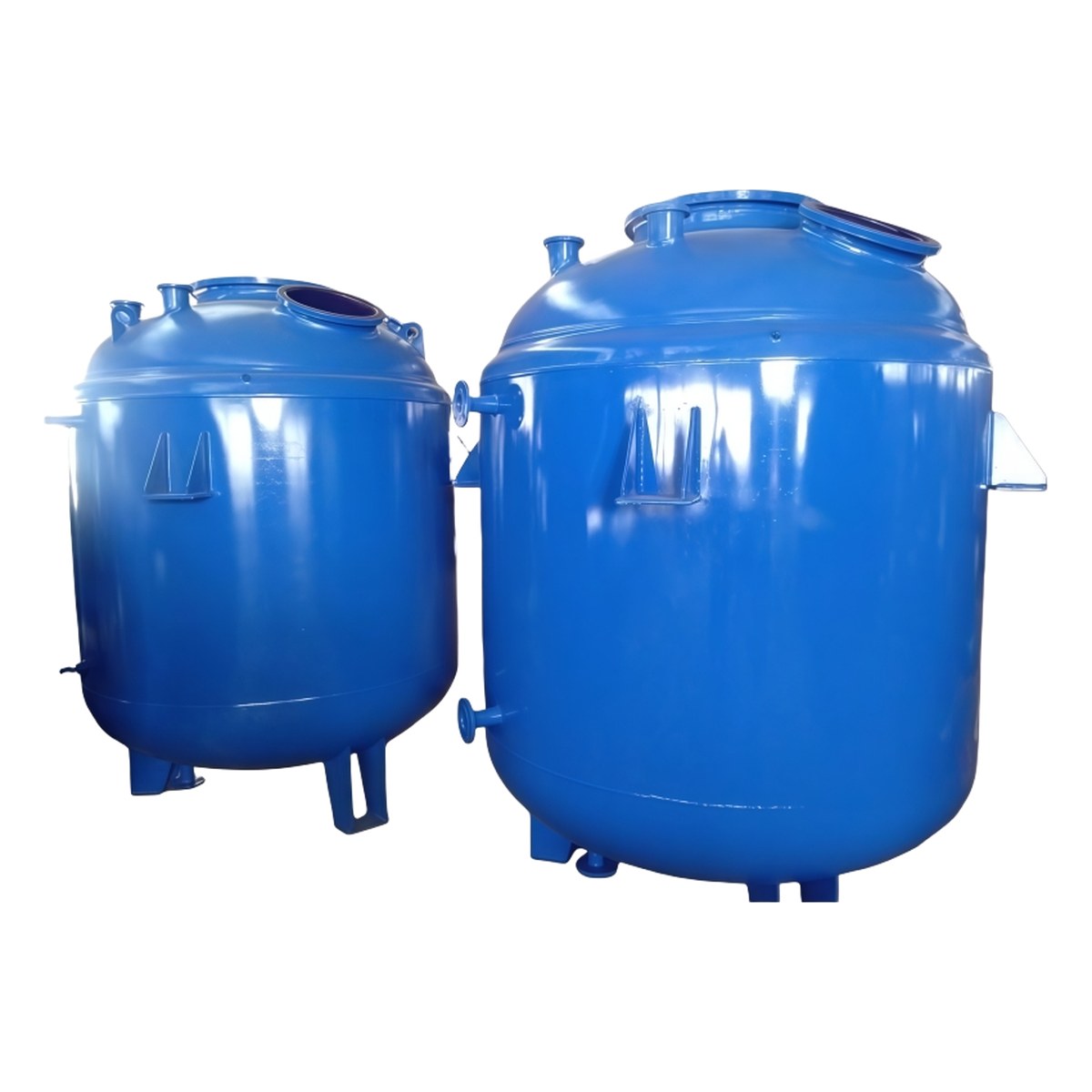
Glass-Lined Reactor
1. Product Overview
The glass-lined reactor is made by applying a high-silicon glass enamel to the inner surface of a steel vessel and firing it at high temperature, producing composite equipment that combines the mechanical strength of steel with the corrosion resistance of glass. Each unit consists of the glass-lined body, agitator, drive, seal, jacket and control system.
Typical applications: chemical synthesis, pesticide production, dye intermediates, pharmaceutical APIs, food processing and other corrosive duties.
Key features: resistance to most inorganic and organic acids and organic solvents, a smooth non-stick surface, good thermal-shock resistance, and a lower cost than special-alloy reactors.
2. Working Principle
Once the materials are charged into the glass-lined body, the agitator rotates to blend them evenly. Steam or thermal oil circulates through the jacket for heating, or cooling water for cooling. The glass lining keeps corrosive media away from the steel substrate so the vessel itself is not attacked, while the control system automatically regulates the jacket medium flow from temperature-sensor feedback to hold a stable process temperature.
3. Classification
By Structural Form
| Type | Features | Typical Applications |
|---|---|---|
| Open type | Cover can be opened entirely | Atmospheric or low pressure, manual feeding/cleaning |
| Closed type | Cover and body connected by flange | Medium-low pressure reaction, high sealing requirements |
| K-type (with manhole) | Manhole on cover, easy maintenance | Large reactors, requires internal entry |
By Agitator Type
| Type | Features | Typical Applications |
|---|---|---|
| Anchor stirrer | Wipes the wall to prevent build-up on the glass lining | High viscosity materials |
| Frame stirrer | Combines axial and radial flow | Medium viscosity materials |
| Paddle stirrer | Simple structure | Low viscosity general mixing |
4. Detailed Technical Parameters
4.1 Glass-Lined Layer Performance Parameters
| Parameter | Specification |
|---|---|
| Glass-lining thickness | 0.8~2.0mm |
| Spark test | No breakdown at 20kV |
| Thermal shock resistance | Cold shock ≤110℃, Heat shock ≤120℃ |
| Surface roughness | Ra≤0.8μm |
| Acid/alkali resistance | Resistant to most acids and alkalis except HF and hot concentrated H3PO4 |
4.2 Typical Specification Table
| Effective Volume (L) | Design Pressure | Design Temp (℃) | Agitator Power | Agitator Speed | Jacket Heat Exchange Area (m²) |
|---|---|---|---|---|---|
| 50~100 | Atm~0.25MPa | ≤200 | 0.75~1.5kW | 60~130rpm | 0.5~0.9 |
| 300~500 | Atm~0.25MPa | ≤200 | 2.2~3kW | 60~130rpm | 1.8~3.0 |
| 1000~2000 | Atm~0.25MPa | ≤200 | 3~5.5kW | 60~130rpm | 3.5~6.5 |
| 3000~5000 | Atm~0.25MPa | ≤200 | 5.5~11kW | 40~100rpm | 8~14 |
| 10000~30000 | Atm~0.25MPa | ≤200 | 11~22kW | 30~80rpm | 18~45 |
Note: Glass-lined reactors generally have a design pressure not exceeding 0.6MPa. For high-pressure conditions, stainless steel or high-pressure reactors are recommended.
4.3 Design Conditions & Performance Indicators
| Parameter | Specification |
|---|---|
| Temp control accuracy | ±1.5℃ |
| Sealing form | Packing seal / Mechanical seal |
| Body material | Q235-B / 16MnR / Q345R |
| Jacket form | Full jacket / half-pipe jacket |
| Support type | Lug support / Leg support |
4.4 Electrical Parameters
| Applicable Region | Voltage | Frequency |
|---|---|---|
| China/Russia/Central Asia | 380V | 50Hz |
| Middle East/Southeast Asia/Africa | 400V / 415V | 50Hz |
| South Korea | 380V | 60Hz |
| Americas (if needed) | 440V / 480V | 60Hz |
Please be sure to specify local voltage and frequency when placing an order.
5. Core Component Selection
| Component | Common Brands | Features & Applications |
|---|---|---|
| Reducer | SEW, NORD, Guomao | Cycloidal or helical hard-face gears |
| Mech. Seal | Domestic glass-lined specific | Glass-lined specific mechanical seal, PTFE bellows, corrosion resistant |
| Motor | ABB, Siemens, Domestic Ex-proof | Standard IP55, Ex d IIC T4 for hazardous areas |
| Enamel surface | Premium high-silicon enamel | Fired above 900℃, resists corrosion and thermal shock |
| Controller | PLC/Microcomputer | Temp, pressure display & auto control |
Customers can specify brand preferences. Refurbished equipment depends on inventory.
6. Typical Application Fields
Pesticides: organophosphorus pesticide synthesis and herbicide production. Dyes: dye intermediate synthesis and azo reactions. Pharmaceuticals: acid-base reactions and chlorination of APIs. Food: seasoning preparation and acid hydrolysis. Fine chemicals: flavor & fragrance synthesis and catalyst preparation
7. Design Standards & Certifications
| Standard | Description |
|---|---|
| GB/T 25026-2010 | Technical conditions for glass-lined equipment |
| GB/T 7996 | Nominal volume and nominal diameter for glass-lined vessels |
| HG/T 2372-2015 | Glass-lined closed stirring vessels |
| ISO 9001:2015 | Quality Management System |
| CE | Available upon request |
| EAC | Available for Russia & Central Asia |
| GOST-R | Available for Russian market |
8. Customizable Options
| Option | Details |
|---|---|
| Heating method | Jacket steam, thermal oil, electric heating |
| Stirring form | Anchor, Frame, Paddle, Combined |
| Sealing form | Packing, Mechanical seal (PTFE/SiC) |
| Nozzles | Sight glass, Manhole, Solid feed port, Distillation port |
| Auxiliary equip. | Glass-lined condenser, storage tank, piping |
| Ex-proof req. | Ex-proof motor, instruments |
9. Warranty Terms
| Equipment Status | Warranty Period | Warranty Scope |
|---|---|---|
| New Equipment | 12 Months | No peeling or cracking of the glass lining; agitator and seal |
| Refurbished Equipment | 6 Months | No obvious glass-lining defects; agitator and seal |
| Idle Equipment (As-is) | 3 Months | Main functional parts |
Final warranty terms are subject to the contract. All orders include installation guidance and remote debugging support.
10. Packaging & Delivery
| Item | Packaging Method |
|---|---|
| Reactor Body | Bare with steel straps, collision protection for enamel |
| Stirring System | Wooden box, shock-absorbing fixed |
| Electrical Parts | Waterproof sealed, packed in wooden box |
| Accessories/Pipes | Wooden or carton box |
Container Capacity Estimation (for reference only):
500 L glass-lined reactor: approx. 1×20'GP; 3000 L glass-lined reactor: approx. 1×40'OT or break-bulk; 5000 L glass-lined reactor: break-bulk
Installation: On-site installation guidance available. Large projects can dispatch technicians (travel & accommodation borne by buyer).
11. Information Required for Quotation
To get an accurate quote, please provide:
Effective volume; working pressure and temperature; reaction medium, concentration and corrosiveness (note if it contains HF or hot concentrated H3PO4); stirring purpose and material viscosity range; heating/cooling method and heat source type; whether a matching glass-lined condenser, storage tank etc. is needed; local voltage and frequency; explosion-proof design required; preferred equipment status: new/refurbished/idle; budget range and brand preference (if any); delivery terms: FOB/CIF/DDP; destination port or delivery address (for freight calculation)