Enzyme Reactor
Fermentation Equipment
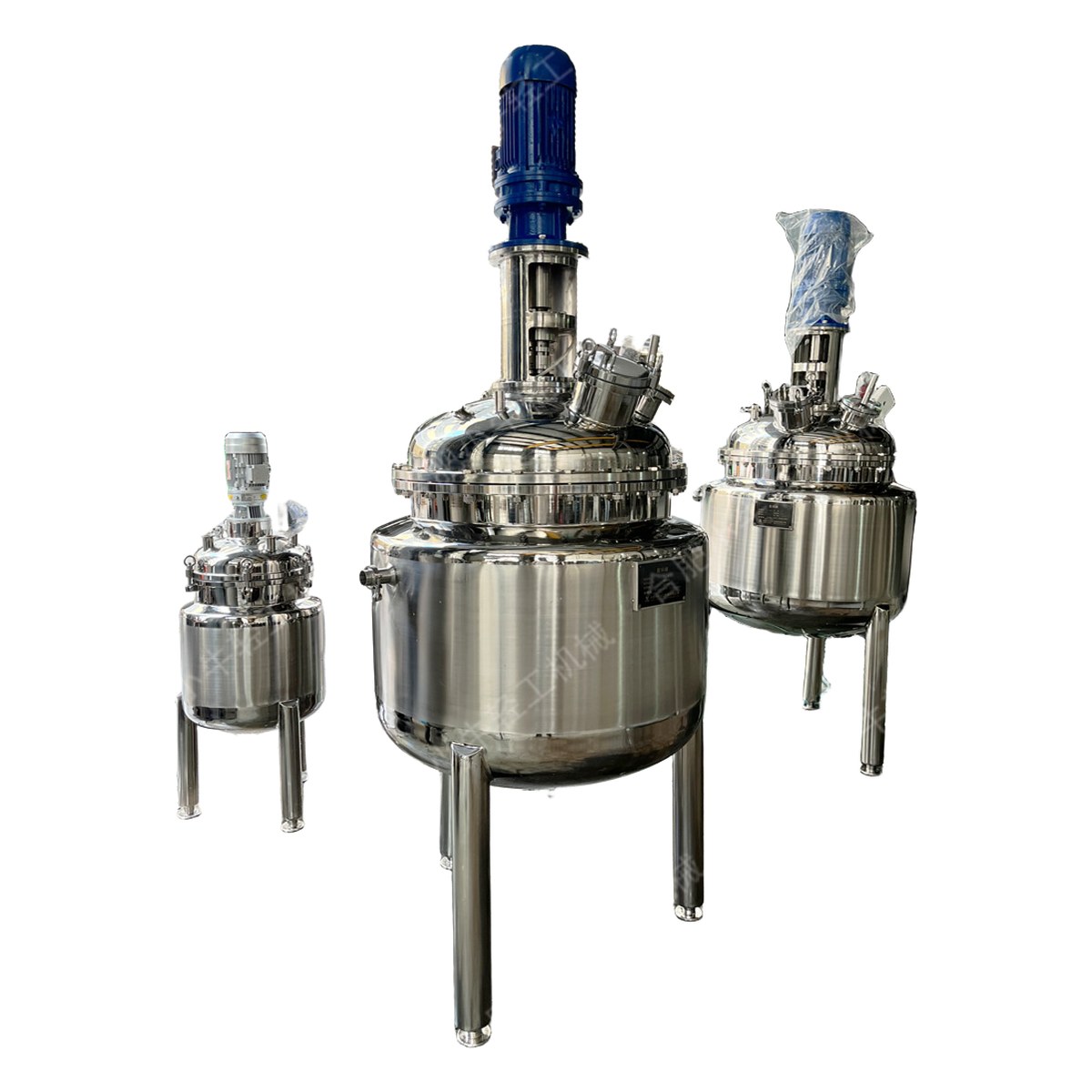
Enzyme Reactor
Model: ENZ Series
1. Product Overview
An enzyme reactor is specialized reaction equipment that harnesses enzyme catalysis to convert substrates into target products efficiently under controlled conditions. Compared with chemical catalysis, enzymatic catalysis offers mild reaction conditions, high catalytic efficiency, and strong selectivity, and is widely applied in the pharmaceutical, food, and chemical industries. By enzyme form, reactors fall into free-enzyme (stirred-tank) and immobilized-enzyme (packed-bed / fluidized-bed / membrane) types. Precise control of temperature, pH, and substrate concentration is required to maintain enzyme activity and reaction rate for efficient bioconversion.
Key Features
- High catalytic efficiency, mild conditions
- Strong selectivity, minimal by-products
- Precise temperature ±0.2°C
- Online pH monitoring and auto-adjustment
- Multiple reactor types: CSTR/PBR/FBR/MR
- CIP/SIP
- GMP, 21 CFR Part 11
2. Working Principle
Free Enzyme Reaction
Free enzyme dissolves directly in the reaction liquor and contacts the substrate for catalysis. After the reaction, the enzyme is separated from the product by ultrafiltration or chromatography. A stirred-tank configuration is normally used, with agitation ensuring uniform enzyme–substrate contact. Mass transfer is highly efficient, but the enzyme cannot be recovered — best suited to inexpensive or single-use enzymes.
Immobilized Enzyme Reaction
The enzyme is immobilized on a carrier (resin, silica gel, membrane, or microspheres), and the substrate solution flows through the immobilized enzyme bed for catalysis. Immobilized enzyme can be reused repeatedly, reducing enzyme costs. Common forms: packed-bed reactors (substrate flows top to bottom), fluidized-bed reactors (carrier suspended in the liquid stream), and membrane reactors (enzyme fixed on the membrane surface or within its pores).
Continuous Flow Reaction
Substrate solution passes continuously through the reactor at a controlled flow rate while product exits continuously. Continuous operation delivers stable product quality and high equipment utilization, making it suitable for large-scale production. Residence time (space time) is the key parameter and is optimized according to enzyme kinetics.
3. System Classification
By Enzyme Form
1. Free Enzyme Reactor (Stirred Tank)
2. Immobilized Enzyme Reactor (Packed/Fluidized/Membrane)
By Operation Mode
1. Batch Reactor
2. Continuous Flow Reactor
3. Fed-Batch Reactor
By Reactor Type
1. CSTR
2. Packed Bed (PBR)
3. Fluidized Bed (FBR)
4. Membrane Reactor (MR)
4. Detailed Technical Parameters
Basic Parameters
| Parameter | Specification |
|---|---|
| Model | ENZ-10 / ENZ-50 / ENZ-200 / ENZ-1000 |
| Working Volume | 5–800 L |
| Working Temperature | 10–80°C (reaction) / 121°C (SIP) |
| Working Pressure | Atmospheric / 0.3 MPa |
| Agitation Speed | 20–500 rpm (CSTR) |
| pH Range | 3.0–10.0 |
| Flow Rate | 0.1–10 L/min (continuous) |
Reactor Parameters
| Model | Volume(L) | Speed(rpm) | Temp Accuracy | Motor(kW) |
|---|---|---|---|---|
| ENZ-10 | 7 | 20–500 | ±0.2°C | 0.37 |
| ENZ-50 | 35 | 20–400 | ±0.2°C | 0.55 |
| ENZ-200 | 140 | 20–300 | ±0.2°C | 1.5 |
| ENZ-1000 | 700 | 15–200 | ±0.2°C | 4.0 |
Material Properties
| Component | Material | Description |
|---|---|---|
| Vessel | SUS316L | Electropolished Ra≤0.4μm |
| Jacket | SUS304 | Full jacket |
| Impeller | SUS316L | Low-shear design |
| Carrier | Resin/Silica/Membrane | As required |
5. Core Component Selection
Reaction Vessel
SUS316L stainless steel with an electropolished internal surface, Ra≤0.4μm. Equipped with jacket temperature control, pH/temperature sensor ports, a CIP spray ball, a sterile sampling valve, an SIP connection, and a sight glass for observing the reaction liquor.
Agitation System
Low-shear impeller design to minimize mechanical damage to enzymes and carriers. VFD 20–500rpm.
Temperature Control
Cooling or heating water circulates through the jacket with PID control at ±0.2°C. Enzyme reactions are highly temperature-sensitive, and control accuracy directly affects enzyme activity and reaction rate. A PT100 temperature sensor is fitted.
pH Adjustment
Online pH electrode with automatic acid/alkali dosing to hold the target pH; peristaltic pumps meter feed liquid with ±0.5% accuracy.
Control System
SIEMENS/AB PLC with a 7–12 inch touch-screen HMI. Real-time monitoring of temperature, pH, DO, agitator speed, and flow rate; recipe management and 21 CFR Part 11 data logging.
6. Typical Application Fields
Pharmaceutical Enzymatic Catalysis
Chiral drug synthesis, semi-synthetic antibiotics, statin intermediates, amino acid derivatives, and nucleoside drugs
Food Enzymatic Catalysis
Starch saccharification, lactose hydrolysis, juice clarification, fats and oils hydrolysis, isomerized sugar production
Chemical Enzymatic Catalysis
Biodiesel, chiral resolution, esterification, polymerization
7. Design Standards & Certifications
Compliant with the following standards and certifications
1. GMP
2. FDA 21 CFR Part 210/211
3. ISO 9001/14001
4. CE
8. Custom Optional Configurations
| Option | Details |
|---|---|
| Reactor Type | CSTR/PBR/FBR/Membrane |
| Volume | 10/50/100/200/500/1000 L |
| Carrier | Resin/Silica/Membrane/Microsphere |
| Operation | Batch/Continuous/Fed-batch |
| pH | Online + automatic |
| Temp | ±0.2°C/±0.5°C |
| CIP/SIP | In-line cleaning/sterilization |
| Control | Manual/Semi-auto/Full-auto PLC |
9. Warranty Terms
| Status | Warranty | Scope |
|---|---|---|
| New | 12 months | Vessel, agitation, temp control, control system |
| Refurbished | 6 months | Agitation, control system |
10. Packaging & Delivery
| Item | Packaging |
|---|---|
| Main Unit | Anti-rust, plastic film, wooden crate |
| Carriers | Individually sealed |
| Electrical | Moisture-proof |
| Documents | Waterproof bag |
Lead time: 60–120 working days for new equipment; 30–60 working days for refurbished equipment.
11. Information Required for Inquiry
For accurate quotation, please provide:
Enzyme type and reaction type
Substrate and product names
Preferred reactor type
Required working volume
Operating temperature and pH range
Operation mode (batch/continuous)
Immobilization carrier needed
CIP/SIP requirements
Material requirements
Preferred control mode
Local voltage and frequency
Equipment status: new/refurbished
Delivery terms and destination port