UV Photocatalytic Oxidizer
Environmental Equipment
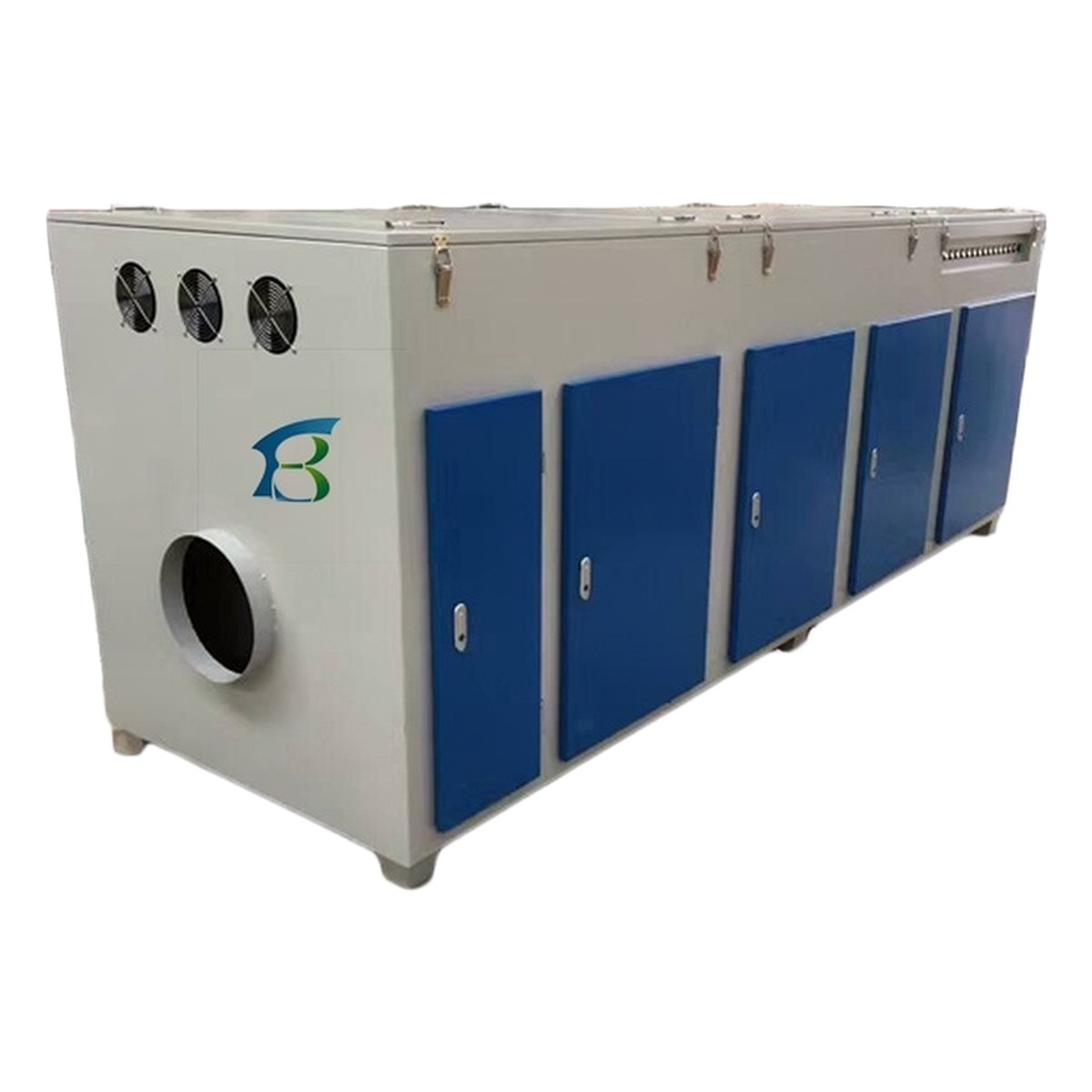
UV Photocatalytic Oxidizer
Professional Process Equipment Supplier
1. Product Overview
The UV Photocatalytic Oxidizer is an air purification device that utilizes UV-C ultraviolet radiation combined with a photocatalyst (TiO₂) and ozone to decompose malodorous gases and volatile organic compounds (VOCs). The equipment irradiates exhaust gas with specially designed high-energy UV-C light beams to break organic molecular bonds, while simultaneously generating ozone from oxygen molecules and activating the TiO₂ photocatalyst to produce highly reactive hydroxyl radicals. The synergistic action of ozone and hydroxyl radicals oxidizes and decomposes organic compounds into low-molecular-weight substances, carbon dioxide, and water. UV photocatalytic oxidizers offer a compact footprint, low operating cost, no secondary pollution, and simple maintenance, making them well suited to commercial kitchen exhaust, odor control at waste transfer stations and wastewater treatment plants, and VOCs abatement in spray booths.
2. Working Principle
The UV photocatalytic oxidizer operates on the synergy of photochemical oxidation and photocatalysis, through the following processes: First, when malodorous and VOCs-laden exhaust gas enters the purifier, it is irradiated by high-energy UV-C lamps emitting dual-wavelength ultraviolet light at 185nm and 254nm. The 185nm wavelength ionizes oxygen molecules in the air to produce ozone (O₃) and free oxygen (O), while the 254nm wavelength activates the titanium dioxide (TiO₂) photocatalyst surface to generate highly reactive hydroxyl radicals (·OH). Simultaneously, the high-energy UV beams directly cleave the molecular bonds of organic malodorous compounds, degrading them into lower-molecular-weight fragments. Ozone and hydroxyl radicals, as extremely powerful oxidizers, rapidly oxidize and decompose these organic fragments, ultimately converting them into harmless substances such as CO₂ and H₂O. The purified gas is discharged through the exhaust stack in compliance with emission standards. The entire process operates at ambient temperature and pressure without additional heating, ensuring safe and reliable operation.
3. System Classification
3.1 Classification by Structure
| Type | Structural Features | Applicable Conditions | Features |
|---|---|---|---|
| Modular UV Oxidizer | UV lamp modular plug-in design | Small- to medium-airflow, multi-point installations | Flexible installation, easy maintenance, scalable |
| Integrated UV Oxidizer | UV lamps + fan + control panel integrated | Single point, centralized treatment | Compact, plug-and-play |
| Combined Activated Carbon UV | UV oxidation + activated carbon adsorption | Complex composition, high concentration | Dual purification, high efficiency |
3.2 Classification by Air Volume
| Type | Air Volume Range | Typical Lamp Count | Application Scenario |
|---|---|---|---|
| Small | ≤5,000m³/h | 8~20 lamps | Single kitchen vent, small-area deodorization |
| Medium | 5,000~20,000m³/h | 20~80 lamps | Commercial kitchens, waste transfer stations |
| Large | ≥20,000m³/h | 80+ lamps / multi-module | Sewage plants, large spray booths |
4. Detailed Technical Parameters
4.1 Key Component Materials
| Component | Material | Surface Treatment/Spec | Characteristics |
|---|---|---|---|
| Enclosure | SS304/galvanized steel | Powder coated/brushed | Corrosion-resistant, durable |
| UV Lamp Bracket | SS304/aluminum alloy | Polished | Corrosion-resistant, high reflectivity |
| Photocatalyst Carrier | Nickel foam/ceramic/SS wire mesh | TiO₂ coated | Large surface area, high catalytic activity |
| Reflector | Mirror-finish SS/aluminum | Mirror polished | Improves UV light utilization |
| Sealing Strip | Silicone rubber/Viton | Heat & aging resistant | Ensures seal, prevents UV leakage |
| Inlet/Outlet Flange | SS304/galvanized steel | Welded/bolted | Standard interface, reliable connection |
4.2 Specification Parameters
| Parameter | Small | Medium | Large |
|---|---|---|---|
| Treatment Air Volume | 1,000~5,000m³/h | 5,000~20,000m³/h | 20,000~100,000m³/h |
| UV Lamp Power | 30~80W/unit | 80~150W/unit | 150W/unit |
| Number of UV Lamps | 8~20 units | 20~80 units | 80+ units |
| UV Wavelength | 185nm+254nm | 185nm+254nm | 185nm+254nm |
| Photocatalyst | TiO₂ (titanium dioxide) | TiO₂ (titanium dioxide) | TiO₂ (titanium dioxide) |
| Processing Temperature | ≤60°C | ≤60°C | ≤60°C |
| Equipment Pressure Drop | ≤300Pa | ≤400Pa | ≤500Pa |
| Purification Efficiency | 90~95% | 92~97% | 95~98% |
| Installed Power | 0.5~3kW | 3~12kW | 12~50kW |
| Equipment Dimensions (ref.) | 0.8×0.6×1.0m | 1.5×1.0×1.5m | 3.0×2.0×2.0m |
4.3 Performance Indicators
| Indicator | Parameter Value | Test Conditions |
|---|---|---|
| VOCs Purification Efficiency | 90~98% | Rated airflow, medium-low concentration |
| Odor Removal Rate | ≥95% | H₂S/NH₃ typical odorants |
| UV Lamp Lifetime | 8,000~12,000 hours | Continuous operation |
| Residual Ozone Concentration | ≤0.1mg/m³ | Measured at outlet |
| Equipment Noise | ≤65dB(A) | Measured at 1m from equipment |
| UV Light Leakage Rate | ≤0.01% | UV radiometer measurement |
| Equipment Availability | ≥98% | Annual statistics |
4.4 Electrical Parameters
| Item | Parameter |
|---|---|
| Power Supply | 1P+N+PE, AC220V±10%, 50Hz / AC380V |
| Control Power | DC24V (switching power supply) |
| Control System | Siemens S7-1200/Mitsubishi FX5U PLC |
| HMI | 7-inch color touchscreen |
| UV Lamp Driver | Dedicated electronic ballast |
| Fan Control | VFD-driven, soft start |
| Safety Protection | Door-open power cutoff, UV leak alarm, overload protection |
| Communication | Ethernet, RS485, Modbus optional |
Note: Electrical component brands can be substituted with equivalent alternatives upon request.
5. Core Component Selection
| Component | Recommended Brand | Model | Function |
|---|---|---|---|
| UV Lamp | Philips/LightSources | 185nm+254nm dual-band | Ozone generation and UV irradiation |
| Photocatalyst Module | Domestic premium/Tosoh | TiO₂ on nickel foam/ceramic | Photocatalytic oxidation of organics |
| Control Panel | Siemens/Mitsubishi | S7-1200/FX5U | System logic control |
| Induced Draft Fan | Nanfang/Shangfeng | Centrifugal low-noise fan | Exhaust gas transport |
| Electronic Ballast | Philips/Tridonic | Dedicated UV ballast | UV lamp drive and stabilization |
| Activated Carbon Filter (opt.) | Coconut shell/coal-based carbon | Honeycomb/panel type | Residual VOCs/ozone adsorption |
Note: Core component brands can be configured per customer specification with prior confirmation.
6. Typical Application Fields
Food Service Industry: Kitchen exhaust purification in restaurants, hotels, and canteens. Effectively removes oil mist particles and odors, meeting cooking fume emission standards and improving surrounding air quality.
Waste Management: Odor treatment at waste transfer stations, landfills, and composting facilities. Removes hydrogen sulfide, ammonia, and mercaptans, improving the living environment for nearby residents.
Wastewater Treatment: Odor purification from pump rooms, sludge dewatering rooms, and aeration tanks at sewage treatment plants. Removes H₂S, NH₃, and VOCs to ensure compliance with air quality standards.
Spray Coating: VOCs treatment from small spray booths and repair rooms. Combined with pre-filtration of paint mist, removes organic solvent odors and harmful components.
Other Industries: Food processing odors, livestock farm emissions, pharmaceutical workshop exhaust, and various low-to-medium concentration odor and VOCs treatment scenarios.
7 Design Standards & Certification
7. Design Standards and Certifications
| Standard Category | Standard No. | Standard Name |
|---|---|---|
| International | ISO 9001:2015 | Quality Management System Requirements |
| International | ISO 14001:2015 | Environmental Management System Requirements |
| China | GB 14554-93 | Emission Standards for Odor Pollutants |
| China | GB 37822-2019 | VOCs Fugitive Emission Control Standard |
| China | GB 18483-2001 | Cooking Fume Emission Standard |
| China | GB 16297-1996 | Integrated Emission Standard of Air Pollutants |
| Industry | HJ 1093-2020 | UV Photocatalytic Oxidation Technical Feasibility Guide |
| Industry | CE | EU Machinery Directive 2006/42/EC |
8. Customization Options
| Option | Description | Application Scenario |
|---|---|---|
| Pre-Filtration Module | Coarse/medium filter + paint mist filter | Dusty/oily exhaust streams |
| Activated Carbon Adsorption Section | Post-stage activated carbon for residual VOCs | Complex composition/high concentration |
| Ozone Decomposer | Catalytic decomposition of residual ozone | Strict ozone emission requirements |
| Explosion-Proof Configuration | ExdIIBT4 explosion-proof rating | Chemical/flammable environments |
| Remote Monitoring & Diagnostics | IoT remote O&M platform | Multi-point/remote management |
| VFD Fan Control | Variable frequency fan for energy savings | Variable airflow conditions |
| Multi-Stage Photocatalyst | Additional photocatalytic reaction stages | High concentration/recalcitrant VOCs |
| Auto Cleaning System | UV lamp automatic cleaning device | Oily/fouling exhaust conditions |
9. Warranty Terms
| Warranty Item | Warranty Content |
|---|---|
| Machine Warranty Period | 12 months from acceptance date |
| Core Component Warranty | UV lamps: 8,000 hours / Control panel: 24 months |
| Wearable Parts Warranty | Seals/filters: 6 months |
| Software Upgrade | Free upgrade during warranty period |
| Technical Training | Free training for 2~3 operators during installation |
| After-Sales Response | Phone response within 2 hours, on-site within 24~48 hours |
| Spare Parts Supply | Guaranteed for 5 years after production discontinuation |
Note: Free repair and replacement during warranty for quality-related failures; damage caused by human factors or force majeure is excluded. UV lamps are consumables warrantied by operating hours.
10. Packaging & Delivery
| Item | Description |
|---|---|
| Packaging Method | Machine wrapped in moisture-proof film + wooden crate |
| Crate Specification | Export-grade plywood crate (fumigation-free) |
| Moisture Protection | Desiccant + vacuum aluminum foil bag |
| Shock Protection | EPE foam + bubble wrap (lamps individually shock-packed) |
| Lifting Method | 4-point top lifting |
| Transport Method | Truck/railway/ocean shipping |
Lead time: 30~45 working days after contract signing and deposit received. Installation & commissioning: Seller dispatches technicians for on-site installation, approximately 3~5 working days.
11. Inquiry Information Required
To receive an accurate quotation, please provide the following information:
Exhaust gas treatment volume (m³/h)
Odor/VOCs species and concentration
Exhaust gas temperature and moisture content
Dust and oil content in exhaust gas
Installation location and space constraints
Applicable emission standards (national/local/industry)
On-site power supply specifications
Whether pre-filtration or post-stage activated carbon is required
Whether explosion-proof configuration is needed
Other special customization requirements