Sewage Treatment System
Environmental Equipment
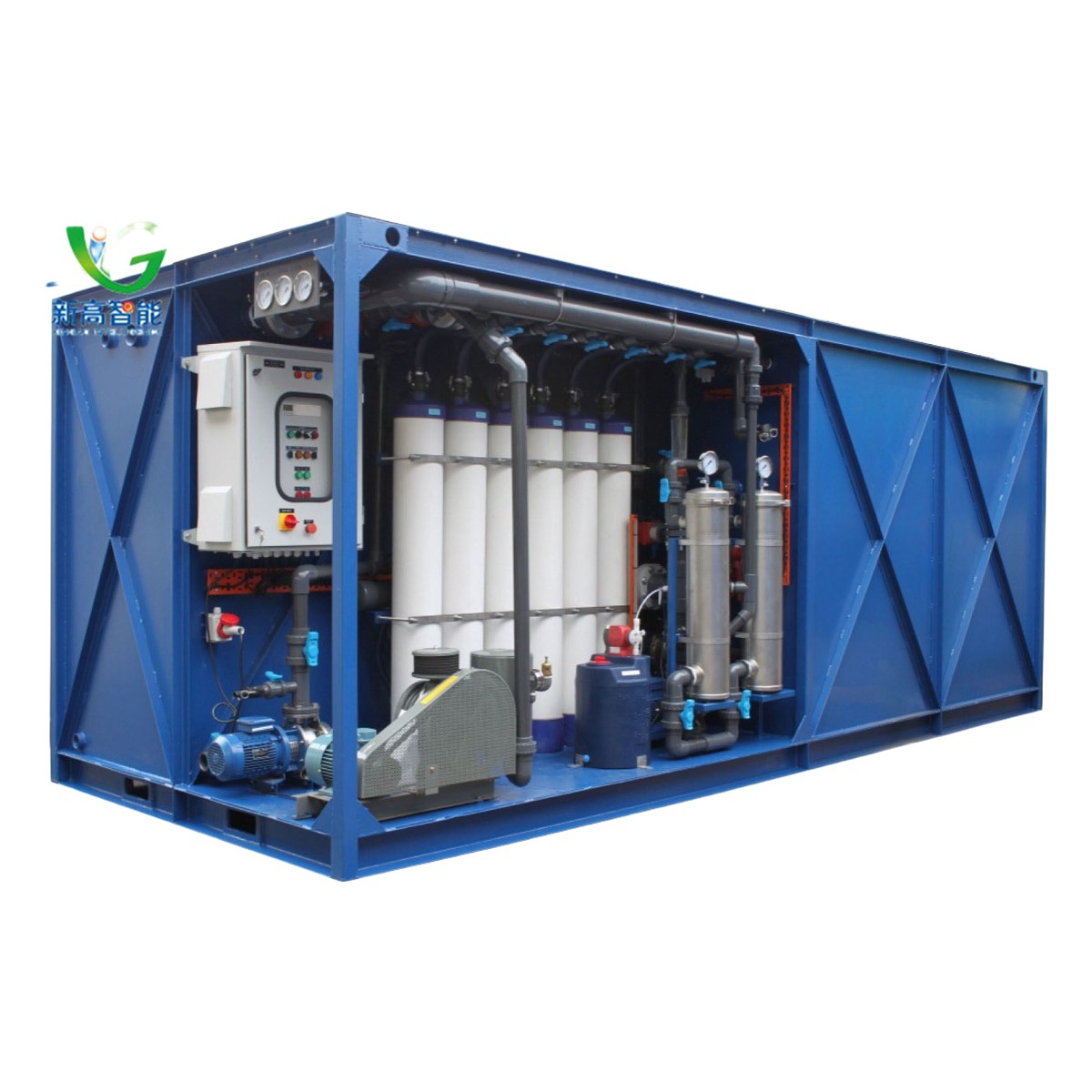
Sewage Treatment System
Professional Environmental Equipment Supplier
1. Product Overview
The sewage treatment system is a comprehensive environmental engineering facility for the collection, conveyance, treatment, and discharge of municipal and domestic sewage. It primarily serves urban residential areas, community housing, hotel resorts, schools, hospitals, and industrial park domestic sewage scenarios. The system employs biological treatment as its core process, utilizing microbial metabolism to remove organic pollutants, nitrogen, phosphorus, and suspended solids from sewage, achieving effluent quality that meets the Class IA standard of GB 18918-2002 or stricter requirements. Sewage treatment systems typically include pretreatment (screening, grit removal), biological treatment (A²/O, MBR, SBR, oxidation ditch, etc.), secondary sedimentation, disinfection, and sludge treatment units. Large and medium-sized plants also incorporate sludge digestion, biogas utilization, and reclaimed water reuse facilities. With accelerating urbanization and rising water quality requirements, sewage treatment systems are evolving towards intensification, intelligence, and resource recovery. Smart water management and sewage resource utilization have become important industry development directions. A well-designed sewage treatment system not only protects the aquatic ecosystem but also enables water recycling, providing essential support for sustainable urban development.
2. Working Principle
The working principle of the sewage treatment system centers on biological treatment, with pollutant removal achieved through the coordinated action of multiple treatment units. The pretreatment stage intercepts larger floating and suspended matter through coarse and fine screens, and grit chambers remove denser inorganic particles, protecting downstream equipment. The biological treatment stage is the core of the entire system: the A²/O process achieves simultaneous nitrogen and phosphorus removal through alternating anaerobic-anoxic-aerobic environments, leveraging the metabolism of polyphosphate-accumulating organisms, denitrifiers, and nitrifiers. The MBR process combines membrane separation with biological treatment, replacing the secondary clarifier with membrane modules for solid-liquid separation, dramatically improving effluent quality and mixed liquor suspended solids concentration. The SBR process completes filling, reacting, settling, decanting, and idling phases sequentially in a single reactor, offering operational flexibility for flow variations. The oxidation ditch process achieves efficient organic removal and stable nitrification-denitrification through extended aeration in an annular channel. After treatment, effluent is disinfected with UV or sodium hypochlorite to eliminate pathogenic microorganisms, and waste sludge is thickened, dewatered, and transported for disposal. The entire system is centrally monitored by SCADA with online water quality detection and automatic parameter adjustment.
3. System Classification
3.1 Classification by Treatment Process
| Process | Characteristics | Applicable Scale | Effluent Quality |
|---|---|---|---|
| A²/O Process | Anaerobic-Anoxic-Aerobic, simultaneous N&P removal | ≥10,000 m³/d | Class IA stable compliance |
| MBR Process | Biological + Membrane, high flux & quality | 100~50,000 m³/d | Better than Class IA, reusable |
| SBR Process | Sequential batch, flexible for flow variations | ≤30,000 m³/d | Class IA/IB |
| Oxidation Ditch | Annular extended aeration, stable operation | 500~100,000 m³/d | Class IA stable compliance |
| Integrated Unit | Contact oxidation, compact & quick install | ≤500 m³/d | Class IB/IA |
3.2 Classification by Treatment Scale
| Scale | Treatment Capacity | Service Population | Construction Type |
|---|---|---|---|
| Small | ≤500 m³/d | ≤5,000 persons | Integrated equipment |
| Medium | 500~10,000 m³/d | 5,000~100,000 persons | Combined structures |
| Large | ≥10,000 m³/d | ≥100,000 persons | Municipal WWTP |
4. Detailed Technical Parameters
4.1 Materials of Process-Contacting Parts
| Component | Material | Surface Treatment | Characteristics |
|---|---|---|---|
| Biological Tank | SS304/316L/CS concrete | Anti-corrosion coating/lining | Corrosion-resistant, high structural strength |
| Piping System | HDPE | Heat/electrofusion joint | Corrosion-resistant, flexible |
| Water Pump | SS316L | Mechanical seal | Corrosion-resistant, reliable |
| Aeration Blower | FRP/CS | Anti-corrosion coating | Corrosion-resistant, low noise |
| Membrane Module Shell | SS304/FRP | Anti-corrosion treatment | Corrosion-resistant, long life |
| Dosing System | PP/PE | Rotomolded | Chemical resistant |
4.2 Specification Parameters
| Parameter | Small Integrated | Medium Combined | Large Municipal |
|---|---|---|---|
| Treatment Capacity | 10~500 m³/d | 500~10,000 m³/d | 10,000~500,000 m³/d |
| Effluent COD | ≤50 mg/L | ≤40 mg/L | ≤30 mg/L |
| Effluent BOD | ≤10 mg/L | ≤8 mg/L | ≤6 mg/L |
| Effluent SS | ≤10 mg/L | ≤8 mg/L | ≤5 mg/L |
| Effluent NH₃-N | ≤5 mg/L | ≤3 mg/L | ≤1.5 mg/L |
| Effluent TP | ≤0.5 mg/L | ≤0.3 mg/L | ≤0.2 mg/L |
| Energy Consumption | 0.4~0.6 kWh/m³ | 0.3~0.5 kWh/m³ | 0.2~0.4 kWh/m³ |
| Footprint | 0.3~1.0 m²/(m³/d) | 0.5~1.5 m²/(m³/d) | 0.3~1.0 m²/(m³/d) |
4.3 Performance Indicators
| Indicator | Parameter Value | Test Conditions |
|---|---|---|
| Effluent Compliance Rate | ≥99% | Annual continuous operation statistics |
| Sludge Yield | 0.3~0.8 kgDS/kgCOD | Design conditions |
| Energy per m³ | 0.2~0.6 kWh/m³ | Annual average operating data |
| MTBF | ≥8000 hours | Normal operating conditions |
| Equipment Availability | ≥98% | Annual statistics |
| Phosphorus Removal | ≥90% | A²/O design conditions |
| Nitrogen Removal | ≥80% | A²/O design conditions |
4.4 Electrical Parameters
| Item | Parameter |
|---|---|
| Power Supply | 3P AC380V/10kV, 50Hz |
| Control System | SCADA + PLC distributed control |
| Online Monitoring | COD/pH/DO/SS/NH₃-N/TP analyzers |
| VFD | ABB/Danfoss variable frequency drive |
| CCTV Surveillance | Plant-wide video monitoring |
| Safety Protection | E-stop, overload, leakage, toxic gas alarm |
| Communication | Industrial Ethernet, RS485, Modbus TCP/RTU |
| Data Storage | Historical data ≥2 years, remote access |
Note: Electrical component brands can be substituted with equivalent alternatives upon request.
5. Core Component Selection
| Component | Recommended Brand | Model/Spec | Function |
|---|---|---|---|
| Screen | Jiangsu Haina | Rotary/Step screen | Intercept floating & suspended matter |
| Aeration System | Jager/Sulzer | Fine-bubble diffuser disc/tube | Dissolved oxygen supply for aerobic tank |
| MBR Membrane | Kubota/Peier | Flat sheet/Hollow fiber membrane | Solid-liquid separation & deep filtration |
| Sludge Dewatering | Andritz | Belt/Centrifuge | Waste sludge thickening & dewatering |
| Blower | AERZEN | Roots/Centrifugal blower | Aeration air supply |
| SCADA System | Siemens | WinCC/S7-1500 | Plant-wide monitoring & data management |
| UV Disinfection | Trojan/Weichen | Low/Medium pressure UV | Effluent disinfection |
| Phosphorus Dosing | SEKO | Metering pump + dosing tank | Chemical phosphorus removal dosing |
Note: Core component brands can be configured per customer specification with prior confirmation.
6. Typical Application Fields
Municipal Sewage: Centralized collection and treatment of urban domestic sewage using A²/O or oxidation ditch processes for large and medium WWTPs, achieving GB 18918 Class IA effluent, with some cities implementing reclaimed water reuse.
Community Housing: On-site treatment of residential community sewage using integrated MBR or contact oxidation equipment with small footprint and easy operation, effluent usable for landscape irrigation and make-up water.
Hotel Resorts: Hotel and resort domestic sewage treated with integrated equipment or small MBR systems, quiet operation, no odor, achieving Class IA standard.
Schools & Hospitals: School and hospital sewage with pathogenic microorganisms requiring enhanced disinfection, using contact oxidation + UV disinfection to ensure hygiene safety.
Industrial Park Domestic Sewage: Workers' domestic sewage in industrial parks with relatively simple composition, using integrated equipment or combined structures, effluent can be discharged or reused for industrial cooling.
7. Design Standards & Certification
| Standard Category | Standard No. | Standard Name |
|---|---|---|
| China | GB 18918-2002 | Discharge Standard of Pollutants for Municipal WWTP |
| China | GB 50014-2021 | Outdoor Drainage Design Standard |
| International | ISO 9001:2015 | Quality Management System Requirements |
| International | ISO 14001:2015 | Environmental Management System Requirements |
| China | GB/T 31962-2015 | Water Quality for Discharge into Urban Sewers |
| China | CJJ 60-2011 | Operation & Maintenance Technical Specification for Municipal WWTP |
| China | GB 50335-2016 | Code for Design of Wastewater Reclamation Engineering |
| Industry | CE | EU Machinery Directive 2006/42/EC |
8. Customization Options
| Option | Description | Application Scenario |
|---|---|---|
| Reclaimed Water Reuse | Advanced treatment to meet reuse standards | Water-scarce regions |
| Sludge Drying & Incineration | Sludge volume reduction >90% | Large WWTP / Limited land |
| Biogas Power Generation | Sludge digestion biogas to electricity | Large WWTP / Energy savings |
| Smart Water Platform | AI-optimized operation + remote management | Multi-plant / Group management |
| Odor Control System | Biofilter / Activated carbon deodorization | Near residential areas |
| Combined Sewer Overflow | Combined sewer storage + treatment | Old urban area CSO retrofit |
| Underground Design | Fully underground with surface greening | Urban center / Landscape requirements |
| Modular Expansion | Reserved modular expansion interfaces | Phased construction / Future expansion |
9. Warranty Terms
| Warranty Item | Warranty Content |
|---|---|
| Whole-System Warranty Period | 12 months from acceptance date |
| Core Component Warranty | Blower/membrane modules/dewatering: 24 months |
| Wear Parts Warranty | Aeration membranes/dosing tubing/UV lamps: 6 months |
| Software Upgrade | Free upgrade during warranty period |
| Technical Training | Free training for 3~5 operators during installation |
| After-Sales Response | Phone response within 2 hours, on-site within 24~48 hours |
| Spare Parts Supply | Guaranteed for 5 years after production discontinuation |
Note: Free repair and replacement during warranty for quality-related failures; damage caused by human factors or force majeure is excluded.
10. Packaging & Delivery
| Item | Description |
|---|---|
| Packaging Method | Machine wrapped in moisture-proof film + wooden crate |
| Crate Specification | Export-grade plywood crate (fumigation-free) |
| Moisture Protection | Desiccant + vacuum aluminum foil bag |
| Shock Protection | EPE foam + bubble wrap cushioning |
| Lifting Method | 4-point top lifting |
| Transport Method | Truck/railway/ocean shipping |
Lead time: 60~90 working days after contract signing and deposit received. Installation & commissioning: Seller dispatches technicians for on-site installation, approximately 15~30 working days.
11. Inquiry Information Required
To receive an accurate quotation, please provide the following information:
Sewage type (municipal/community/hotel/school/hospital, etc.)
Design treatment capacity (m³/d) and peaking factor
Influent quality parameters (COD/BOD/SS/NH₃-N/TP/pH, etc.)
Discharge standard requirements (GB 18918 class or local standard)
Whether reclaimed water reuse is required (reuse purpose & quality)
Site conditions (area/topography/geology/power supply)
Surrounding environmental requirements (noise/odor/landscape)
Construction schedule requirements
Budget range and ROI requirements
Other special customization requirements